Water Carefoam
Why Is My Hot Tub Water Foamy?
Hot tub foam can be linked to soap and lotion residue from bathers and swimwear, low calcium hardness, or water that has been in the spa a long time. These are documented possibilities, not a ranked or complete list, so checking bather habits and water chemistry together is the starting point manufacturer guidance supports.
- By
- TubWise Editorial Team
- Published
- Last updated
- hot tub foam
- water care
- hot tub chemistry
- filtration
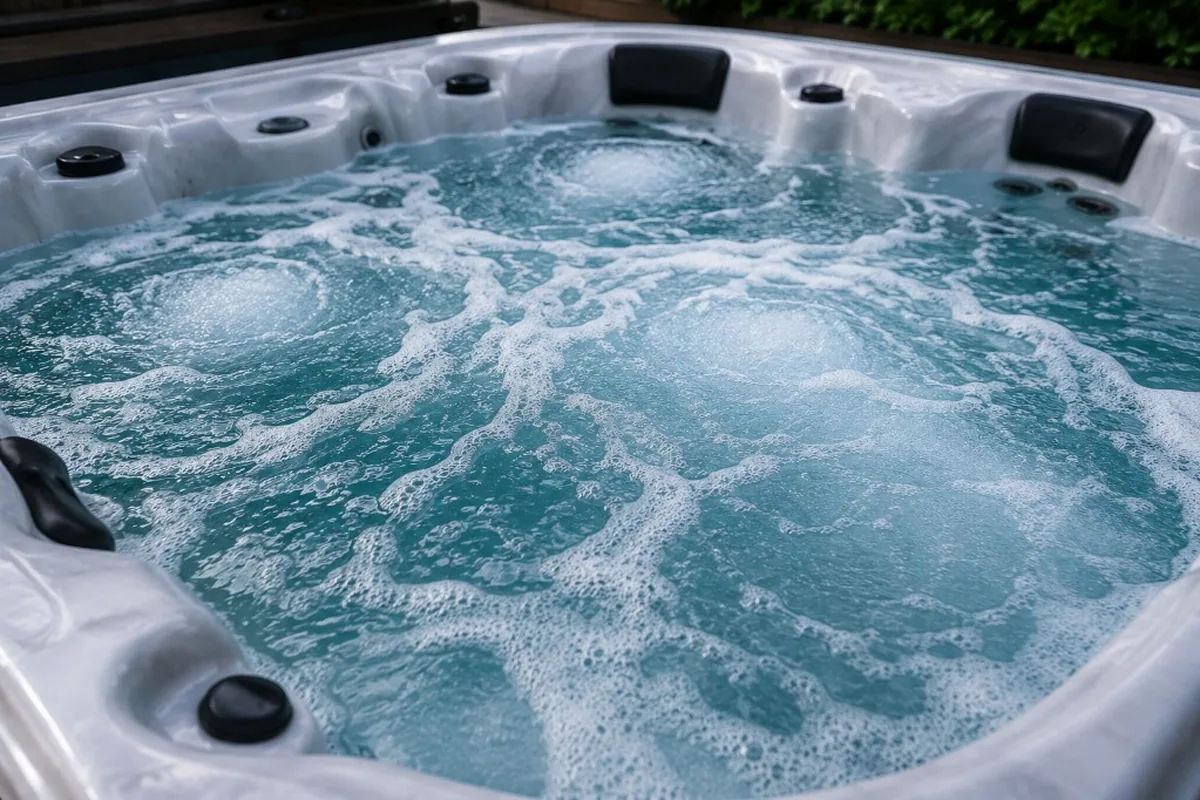
Foamy hot tub water can be tied to soap and body-product residue that bathers and swimwear carry into the water, low calcium hardness, or water that has been in the spa for a while without a change. Jacuzzi and Hot Spring both document soap-based residue as a cause, and both also document low calcium hardness and accumulated dissolved solids as contributing factors. None of the sources reviewed for this article rank these causes by how often each one occurs, so treat them as documented possibilities to check rather than a most-likely-first list.
Safety note
Foam by itself is not necessarily a sign of unsafe water, but it can appear alongside low sanitizer levels. Test your chlorine or bromine and pH before deciding whether the spa is safe to use. Follow the instructions on your chemical product labels, and don’t mix different pool or spa chemicals together. For a closer look at whether foam signals a safety concern, see Is Foamy Hot Tub Water Safe to Use?
Causes to check
Soap, lotions, and body oils
Jacuzzi’s guidance names a high concentration of lotions, body oils, and soap as a cause of foam, and recommends a spa defoamer along with a pH adjustment and sanitizer as the fix (Jacuzzi). Hot Spring’s owner’s manual explains why this residue is hard to clear on its own: soap enters the water from bathers’ bodies and from swimwear, and it isn’t broken down by chlorine or bromine. Only ozone can oxidize soap, so foam inhibitors suppress the bubbles without removing the underlying soap (Hot Spring). For a closer look at this specific source, see Can Soap, Lotion, or Detergent Cause Hot Tub Foam?
Detergent residue from bathing suits
Jacuzzi’s setup guide separately lists foamy water as a common setup-stage issue, describing it as soap residue from bathing suits, lotions, or cleaning products, and recommending a shower before use and avoiding soaps or bubble bath in the spa (Jacuzzi). A swimsuit rinsed in plain water rather than left with detergent residue is one of the simpler variables to rule out.
Low calcium hardness
Both Jacuzzi and Hot Spring’s guidance connect soft water (low calcium hardness) to foaming (Jacuzzi; Hot Spring). This is a water-chemistry cause rather than a contamination one, which is why testing calcium hardness alongside pH and sanitizer is worth doing before assuming the cause is bather products.
Recently added chemicals
If the foam appeared right after you treated the water, the order or amount of product used can be a factor rather than a new source of contamination. See Hot Tub Foam After Adding Chemicals: What Happened? for that specific situation.
Old water with accumulated soap or dissolved solids
Hot Spring’s manual states that soap buildup eventually concentrates in the water to the point that it affects the feel of the water on skin, and that a drain and refill becomes the appropriate fix, with water life estimated at around four months depending on how much soap is introduced (Hot Spring). That four-month figure comes from one manufacturer’s guidance and isn’t a universal chemistry threshold, so check your own owner’s manual for a specific interval. This overlaps with cloudy-water causes tied to old water and total dissolved solids; see Why Is My Hot Tub Water Cloudy? if you’re seeing haze along with the foam.
Safe checks you can do
- Test the water first. Check pH, alkalinity, calcium hardness, and sanitizer before adding anything. See What to Look for in a Hot Tub Water Test Kit if you need a kit that matches the parameters your system requires.
- Rinse swimwear in plain water rather than leaving detergent residue on suits that go back into the spa.
- Shower before soaking to reduce the lotions, oils, and soap residue bathers bring into the water.
- Use a spa-specific defoamer for a short-term reduction in visible foam, following the product label.
- Adjust calcium hardness if your test shows a low reading, following your product label and owner’s manual target range.
- Consider how long the water has been in the spa. Persistent foam despite correct chemistry and clean swimwear can point toward a drain and refill.
When to stop and get help
Stop using the spa and don’t just keep adding defoamer if:
- Sanitizer or pH readings are outside a safe range and you can’t correct them
- Foam returns quickly after a defoamer treatment and a fresh water test
- You notice a strong chemical smell instead of little to no odor, which the CDC flags as a possible sign of a water problem (CDC)
If foam keeps returning despite correct chemistry, clean swimwear, and a defoamer, manufacturer guidance points to a drain and refill as the next step. For related questions, see Hot Tub Foam After Adding Chemicals: What Happened?, Can Soap, Lotion, or Detergent Cause Hot Tub Foam?, and Is Foamy Hot Tub Water Safe to Use?
Sources
- Signs and Symptoms Your Hot Tub Water Needs Maintenance — Jacuzzi; Accessed 2026-07-31
Official Jacuzzi guide naming lotions, body oils, and soap as causes of foam, alongside a separate section on green water and algae.
- Complete Beginner's Guide to Setting Up Your Jacuzzi — Jacuzzi; Accessed 2026-07-31
Official Jacuzzi setup guide listing foamy water as a common setup-stage issue tied to soap residue, lotions, and low calcium hardness.
- Highlife Collection Owner's Manual — Hot Spring Spas (Watkins Wellness); Accessed 2026-07-31
Official owner's manual describing soap as the source of hot tub foam, noting only ozone oxidizes soap, and stating water should be changed roughly every four months depending on soap input.
- Home Pool and Hot Tub Water Treatment and Testing — Centers for Disease Control and Prevention (CDC); Accessed 2026-07-31
CDC guidance on chlorine and pH targets for residential hot tubs.
Related articles
Hot Tub Foam After Adding Chemicals: What Happened?
Foam right after adding chemicals can come from jet aeration, the order products were added, or excess dosing. Here's how to tell these documented possibilities apart.
Read guideCan Soap, Lotion, or Detergent Cause Hot Tub Foam?
Yes. Manufacturer guidance names soap, lotion, and detergent residue from bathers and swimwear as documented causes of hot tub foam. Here's how it gets into the water.
Read guideIs Foamy Hot Tub Water Safe to Use?
Foam by itself doesn't confirm the water is safe or unsafe. Here's how to check sanitizer and other water conditions before deciding whether to use the spa.
Read guideWhy Is My Hot Tub Water Green?
Green hot tub water can point to algae from low sanitizer and high pH, or dissolved iron and copper. Here's how manufacturers describe telling them apart.
Read guide