Water Carefoam
Can Soap, Lotion, or Detergent Cause Hot Tub Foam?
Yes, soap, body lotions, and detergent residue on swimwear are documented causes of hot tub foam. According to Hot Spring's owner's manual, soap in particular resists being broken down by chlorine or bromine, which is why it can persist until the water is changed.
- By
- TubWise Editorial Team
- Published
- Last updated
- hot tub foam
- water care
- hot tub chemistry
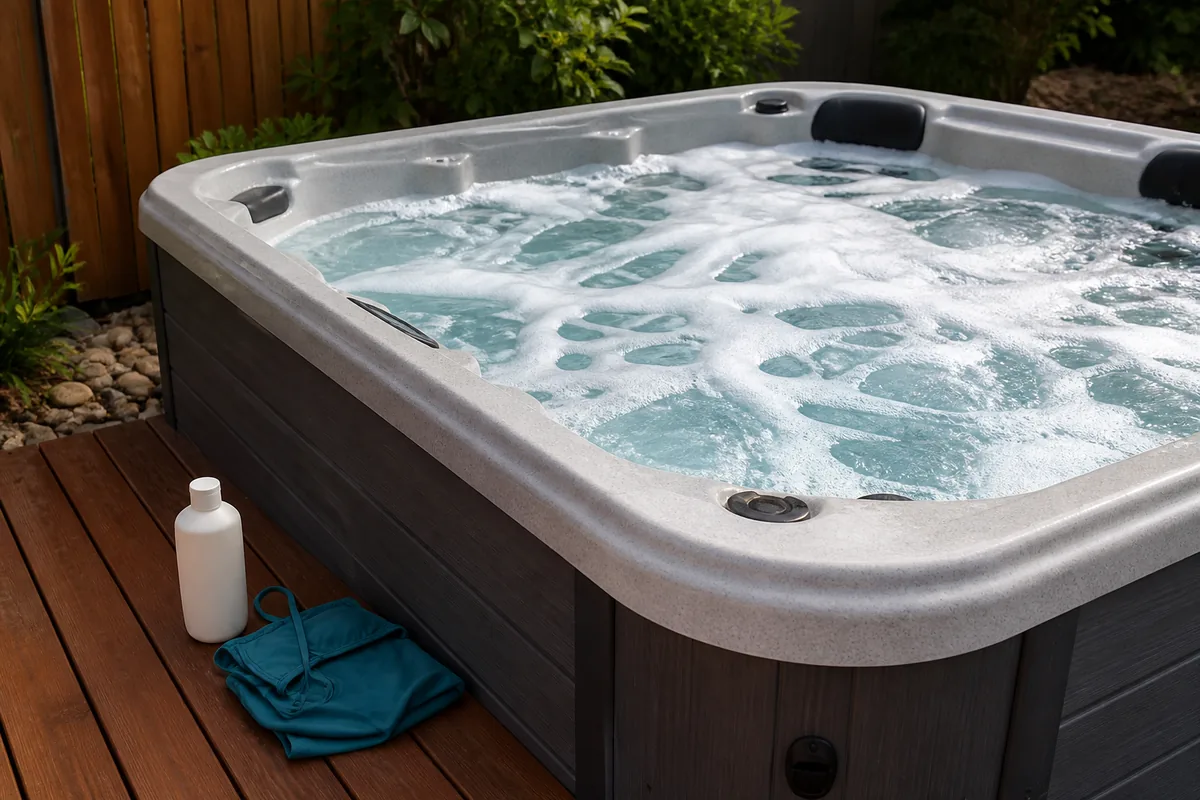
Yes. Soap, body lotions, cosmetics, and detergent residue on swimwear are documented causes of hot tub foam. Hot Spring’s owner’s manual and Jacuzzi’s water-care guidance both name these bather-related products as sources of foam, separate from water chemistry problems.
Safety note
Foam by itself does not confirm whether the water is safe. Soap and lotion residue on its own is more of a comfort and cosmetic issue than a documented sanitizer or contamination risk, but that’s only true if sanitizer and pH also test correctly. Test the water rather than relying on how the surface looks, follow your chemical product’s label for any dosing, and don’t mix different products together.
How these products end up in the water
Bodies carry soap and lotion residue into the spa
Hot Spring’s owner’s manual states that soap is introduced into spa water from two sources: bathers’ bodies, which retain a soap residual after showering, and swimming apparel, which retains soap after washing (Hot Spring). Jacuzzi’s guidance similarly names a high concentration of lotions, body oils, and soap as a cause of foam (Jacuzzi). The sources reviewed for this article name lotions, body oils, and soap specifically; they don’t separately call out makeup, deodorant, sunscreen, or hair products by name, though those sit on skin the same way and aren’t ruled out as related residue.
More bathers, more residue
None of the sources reviewed for this article give a specific figure for how quickly foam builds up per person, so TubWise won’t invent one. What the guidance does support is that the residue comes from bathers and their swimwear, which means more people soaking, or the same people soaking without a shower first, adds more of the same contributing factors to the water between drains.
Swimsuits and detergent residue
Jacuzzi’s setup guide lists foamy water as a common early-ownership issue, describing it as soap residue from bathing suits, lotions, or cleaning products, and recommends avoiding soaps or bubble bath in the spa and showering before use (Jacuzzi). A swimsuit washed in laundry detergent and not rinsed thoroughly can carry that detergent directly into the spa the next time it’s worn.
Why this kind of foam is hard to clear with chemicals alone
Hot Spring’s manual is direct about the underlying chemistry: soap is not oxidized by any chemical added to a spa, and only ozone can oxidize it. Foam inhibitors suppress the visible bubbles, but they don’t remove the soap causing them (Hot Spring). That’s why repeated defoamer treatments without addressing the source tend to be a short-term fix rather than a lasting one.
It builds up over time
The same manual explains that soap buildup eventually concentrates in the water, to the point of affecting how the water feels on skin, and that a drain and refill is the appropriate response once that happens. Depending on how much soap is introduced, Hot Spring estimates the water should last around four months before needing to be drained (Hot Spring). This is a documented example from one manufacturer’s guidance and may not match every brand’s recommended interval, so check your own owner’s manual for a specific figure.
Safe checks the homeowner can do
- Shower before soaking, without soap if possible, to reduce residue carried into the water.
- Rinse swimsuits in plain water after washing them, rather than relying on a laundry cycle alone.
- Limit lotions, sunscreen, and heavy hair products right before getting in the spa.
- Use a spa-specific defoamer for short-term relief, following the product label, while understanding it doesn’t remove the underlying soap.
- Track how long it’s been since the last drain. If soap-based foam keeps returning, the water itself may be due for a change.
- Ask your dealer about an ozone system if you don’t already have one. Hot Spring’s manual states that only ozone can oxidize soap already in the water, and that other spa chemicals don’t (Hot Spring).
When this isn’t the cause
If foam persists even with clean swimwear and consistent pre-soak showers, water chemistry (low calcium hardness or an imbalance) or a chemical you recently added may be a bigger factor. See Why Is My Hot Tub Water Foamy? for the fuller list of causes, or Hot Tub Foam After Adding Chemicals: What Happened? if the timing lines up with a recent treatment. If you’re unsure whether it’s safe to use the spa while foam is present, see Is Foamy Hot Tub Water Safe to Use?. Oils and lotions can also leave a ring at the waterline; see Why Is There a Ring Around My Hot Tub Waterline?.
Sources
- Highlife Collection Owner's Manual — Hot Spring Spas (Watkins Wellness); Accessed 2026-07-31
Official owner's manual explaining that soap enters spa water from bathers' bodies and swimwear, that only ozone can oxidize soap, and that persistent soap buildup requires a water change.
- Signs and Symptoms Your Hot Tub Water Needs Maintenance — Jacuzzi; Accessed 2026-07-31
Official Jacuzzi guide naming lotions, body oils, and soap as a cause of hot tub foam.
- Complete Beginner's Guide to Setting Up Your Jacuzzi — Jacuzzi; Accessed 2026-07-31
Official Jacuzzi setup guide listing foamy water as a setup-stage issue tied to soap residue from bathing suits, lotions, and cleaning products, with showering before use recommended as prevention.
Related articles
Why Is My Hot Tub Water Foamy?
Foamy hot tub water can trace back to soap and body products, low calcium hardness, or old water. Here are the causes manufacturers document and what to check.
Read guideHot Tub Foam After Adding Chemicals: What Happened?
Foam right after adding chemicals can come from jet aeration, the order products were added, or excess dosing. Here's how to tell these documented possibilities apart.
Read guideIs Foamy Hot Tub Water Safe to Use?
Foam by itself doesn't confirm the water is safe or unsafe. Here's how to check sanitizer and other water conditions before deciding whether to use the spa.
Read guide