Water Carediscoloration
Why Is My Hot Tub Water Green?
Green hot tub water is documented by manufacturers as a sign of algae growth, tied to high pH and low sanitizer, or as staining from dissolved iron or copper in the fill water. The two causes call for different fixes, so testing sanitizer, pH, and metals is the starting point.
- By
- TubWise Editorial Team
- Published
- Last updated
- green water
- algae
- water care
- hot tub chemistry
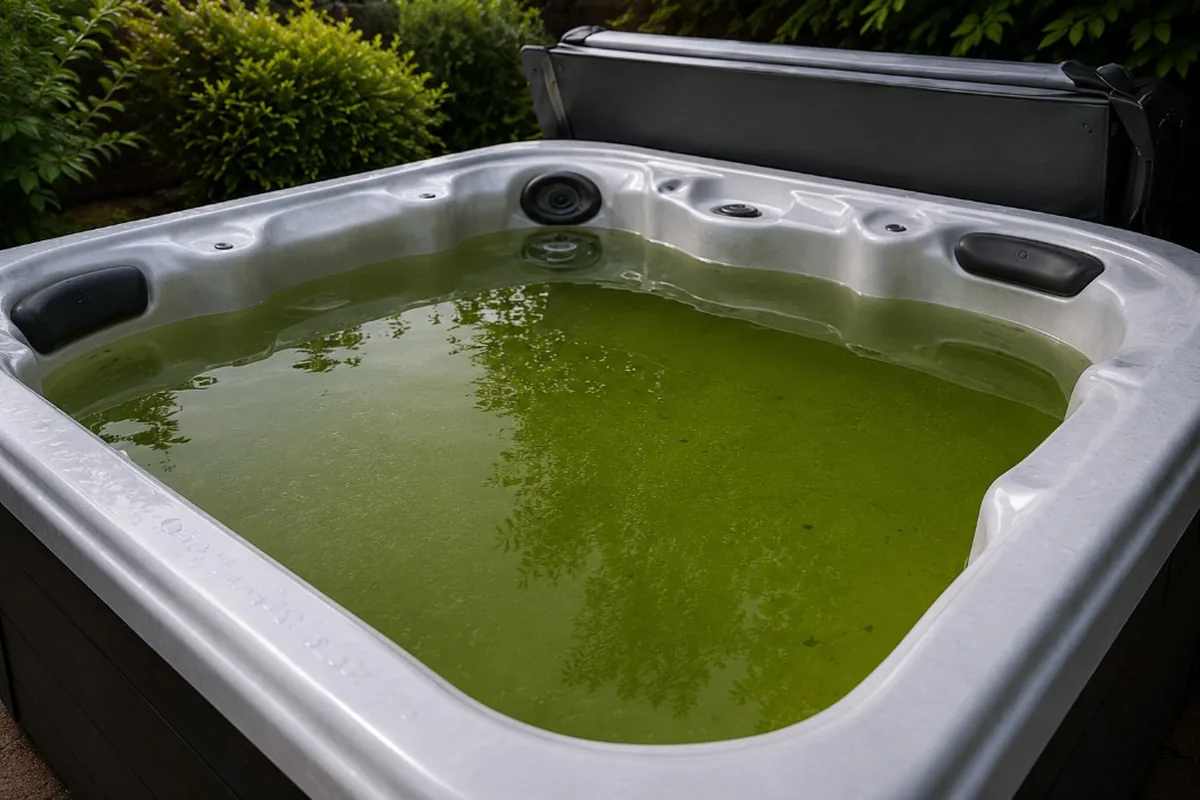
Manufacturer guidance points to two documented causes of green hot tub water: algae growth, which is tied to high pH and low sanitizer, and dissolved iron or copper in the water, which can produce a green or brown tint or stain. The two causes call for different fixes, so it’s worth testing before treating.
Safety note
Don’t get in the spa while the cause is unconfirmed. Algae growth is documented as linked to low sanitizer, meaning the water may not be disinfecting effectively while it’s present. Test chlorine or bromine and pH before deciding whether to use the spa, and follow your chemical product’s label rather than guessing at a dose. Never mix different pool or spa chemicals together.
Causes to check
Algae growth from high pH and low sanitizer
Jacuzzi’s guidance is direct about this: algae thrives in water that has a high pH or a low level of sanitizer (Jacuzzi). Hot Spring’s owner’s manual lists the same two probable causes for algae growth in its troubleshooting chart, high pH and low sanitizer level, with shocking the spa and adjusting pH as the listed solutions (Hot Spring). Neither source ranks algae against metals as the more probable cause, so treat a history of low chlorine or bromine, or infrequent testing, as a reason to check for algae specifically, not as confirmation that algae is the cause.
Dissolved iron or copper in the water
Hot Spring’s manual separately states that high iron or copper content in the water may produce green or brown stains on the spa, and recommends a stain and scale inhibitor for water known to have a high concentration of dissolved minerals (Hot Spring). This cause is more closely tied to your fill water source, particularly well water, than to sanitizer or pH, and it can appear even when chemistry otherwise tests correctly. Confirming a metal cause doesn’t rule out a sanitizer problem existing at the same time. Test chlorine or bromine and pH regardless of which cause the color points to, rather than assuming metal-tinted water is safe to use on appearance alone.
Why pH matters either way
The CDC notes that as pH rises, especially above 8.0, chlorine’s ability to kill germs decreases (CDC). High pH is one of the two factors Jacuzzi and Hot Spring both name for algae growth, which is part of why correcting pH is a listed step in both manufacturers’ guidance, whether algae or a metal turns out to be the actual cause.
Don’t confuse this with cloudy water
Green water and cloudy water are different symptoms with some overlapping causes. If your water looks hazy or dull rather than tinted green, see Why Is My Hot Tub Water Cloudy? for that fuller list of causes, which includes chemistry, sanitizer, body oils, and filtration.
Safe checks the homeowner can do
- Test pH and sanitizer first. Both manufacturers point to high pH and low chlorine or bromine as the algae-related cause. Choose a kit that can read the sanitizer you actually use; see What to Look for in a Hot Tub Water Test Kit.
- Adjust pH toward your product’s recommended range, then add sanitizer or shock according to the label, following Jacuzzi’s documented order of pH first, then sanitizer (Jacuzzi).
- Check and clean the filter while you’re addressing the water. None of the sources reviewed for this article name a dirty filter as a documented cause of green color specifically, but a clean filter supports overall water quality during treatment. See How Often Should You Clean a Hot Tub Filter?
- Test for metals if you fill from a well or an area with known mineral content, and use a stain and scale inhibitor if levels are high, following the product label and your owner’s manual.
- Avoid combining sanitizer shock and a metal-focused product on the same treatment unless your labels specifically allow it. Treat one cause at a time.
- Retest after treatment rather than assuming a single dose resolved the issue.
When to stop and call a technician
Green water is a homeowner-testable and, in many cases, homeowner-treatable issue, but stop and call a technician or your dealer if:
- The water stays green after correcting pH, sanitizer, and running a full circulation cycle
- You suspect a metal source you can’t identify or treat with a sequestrant, such as internal plumbing or heater components
- Discoloration returns quickly after a drain and refill with fresh water
If treatment doesn’t resolve the color, a full drain and refill, followed by retesting your fill water before adding chemicals, is the next step manufacturer guidance points to before assuming an equipment problem. Other water-appearance topics are grouped in Water Care. Color that shows up during or right after a refill has its own fill-water path; see Why Is My Hot Tub Water Discolored After Filling?. If the water is brown rather than green, see Why Is My Hot Tub Water Brown?. If you’re also noticing foam along with the color change, see Why Is My Hot Tub Water Foamy? for that separate set of causes.
Sources
- Signs and Symptoms Your Hot Tub Water Needs Maintenance — Jacuzzi; Accessed 2026-07-31
Official Jacuzzi guide stating algae thrives in water with high pH or a low level of sanitizer, and recommending pH adjustment followed by sanitizer as the fix for green water.
- Highlife Collection Owner's Manual — Hot Spring Spas (Watkins Wellness); Accessed 2026-07-31
Official owner's manual listing high pH and low sanitizer level as the probable causes of algae growth, and stating that high iron or copper content in the water may produce green or brown stains on the spa.
- Home Pool and Hot Tub Water Treatment and Testing — Centers for Disease Control and Prevention (CDC); Accessed 2026-07-31
CDC guidance on chlorine and pH targets for residential hot tubs, and how pH affects chlorine's ability to kill germs.
Related articles
Why Is My Hot Tub Water Foamy?
Foamy hot tub water can trace back to soap and body products, low calcium hardness, or old water. Here are the causes manufacturers document and what to check.
Read guideWhy Is My Hot Tub Water Cloudy?
Cloudy hot tub water can trace back to water chemistry, sanitizer, filtration, or old water. Here's how to narrow it down and when to stop using the spa.
Read guideCan a Dirty Filter Make Hot Tub Water Cloudy?
Yes. A dirty or clogged filter is a documented cause of cloudy hot tub water. Here's how to tell if your filter is the cause and how to check it safely.
Read guide