Water Carechemicals
Hot Tub Foam After Adding Chemicals: What Happened?
Foam that appears right after adding chemicals can be brief aeration from jets mixing a new product, a sign the balancing order was skipped, or a result of adding too much product at once. Retesting after a full circulation cycle is the first step before adding anything else.
- By
- TubWise Editorial Team
- Published
- Last updated
- hot tub foam
- hot tub chemicals
- water balance
- water care
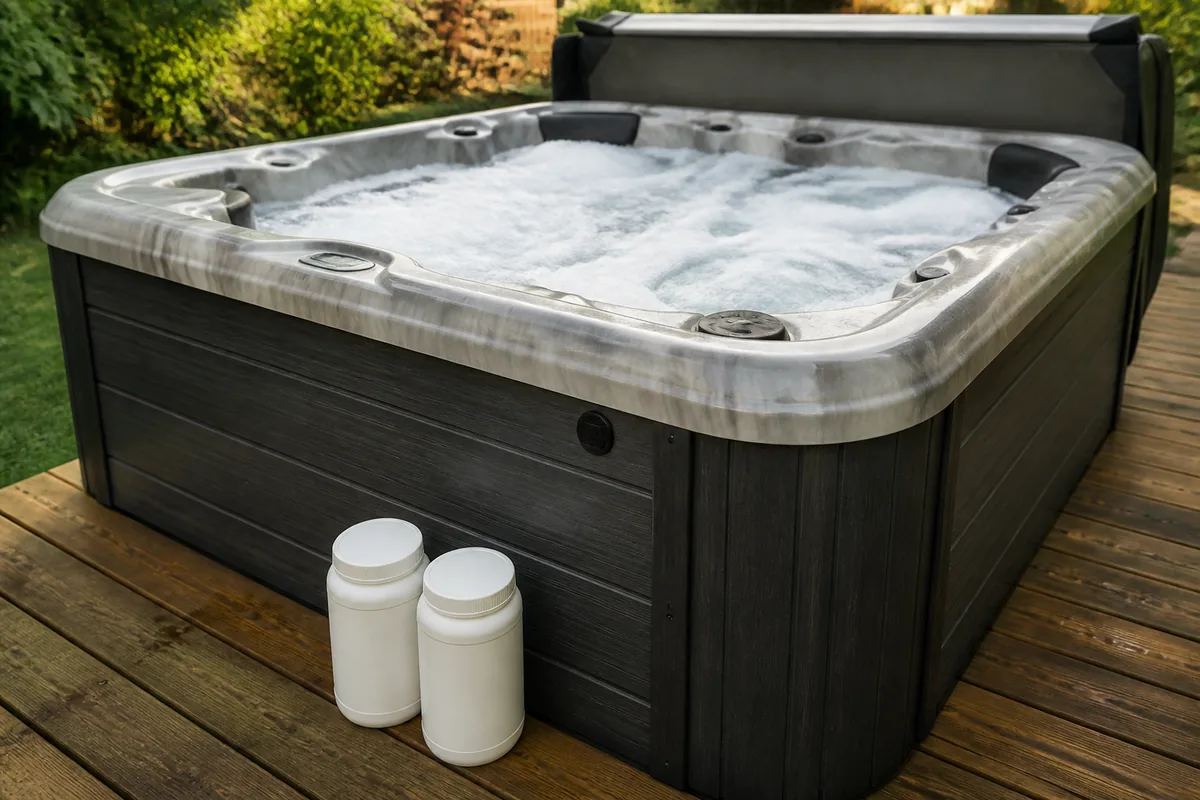
Foam that shows up right after you add chemicals can come from a few different things: brief aeration as the jets mix in a new product, the balancing order being skipped, or too much product going in at once. It isn’t necessarily a sign of a new contamination problem separate from the chemicals themselves.
Safety note
Don’t add more product to try to knock down foam right away. Follow your chemical label’s instructions for dosing and wait times, and never mix different pool or spa chemicals together or add more than one product at a time. Hot Spring’s owner’s manual instructs that spa chemicals, including liquid defoamer, be added directly into the filter compartment with the jet pump running on high speed for at least ten minutes, so check whether your product and spa call for that step before adding anything (Hot Spring).
Possible explanations
None of these apply in every case. They’re documented possibilities to check, not a guaranteed diagnosis.
Aeration from the jets
Jacuzzi’s guidance notes that jets can increase foam by creating bubbles as they keep the water moving (Jacuzzi). If you added a chemical while the jets were running, or turned them on right after, that circulation can visibly agitate the water and produce short-lived surface bubbles independent of anything wrong with the chemical or the dose. This is worth distinguishing from foam that persists well after the jets have run their normal cycle and the water has settled, which points more toward one of the causes below.
The balancing order was skipped
Jacuzzi’s setup guidance describes a specific sequence: total alkalinity first, then pH, then sanitizer, in order to prevent chemical interactions that can affect water clarity or reduce effectiveness (Jacuzzi). If a sanitizer or pH product went in before alkalinity was corrected, foam can appear even though the label amounts were followed correctly. Hot Tub Water Cloudy After Adding Chemicals covers the same sequencing issue for cloudiness; see Hot Tub Water Cloudy After Adding Chemicals if you’re seeing both symptoms together.
Too much product, or more than one product at once
Jacuzzi’s setup guide documents a case where new spa owners added too many chemicals at once and overwhelmed the filtration system, affecting the water (Jacuzzi). That documented example is about overall water balance rather than foam specifically, but the same underlying practice, adding more than the label amount or adding several products back to back, is a reasonable factor to rule out. Stick to one product at a time, at the label’s stated amount for your spa’s actual water volume, and wait for the manufacturer’s recommended interval (Jacuzzi’s guidance points to about 24 hours between major adjustments) before deciding another correction is needed (Jacuzzi).
A chemical addition can expose residue that was already there
Jacuzzi’s guidance names lotions, body oils, and soap as foam sources separate from chemical dosing (Jacuzzi). None of the sources reviewed for this article describe a specific chemical reaction between a sanitizer or oxidizer and that residue, so TubWise won’t assert one. What’s plausible, without being a documented mechanism, is that adding a product and running the jets can make residue that was already in the water more visible, which can look like the chemical caused the foam rather than exposed it. See Can Soap, Lotion, or Detergent Cause Hot Tub Foam? for that specific cause.
Low calcium hardness
Jacuzzi’s setup guide notes that low calcium hardness, or water that is too “soft,” can contribute to foaming independent of what was just added (Jacuzzi). A chemical addition that raises pH or sanitizer won’t correct a calcium hardness problem on its own.
Safe checks the homeowner can do
- Stop adding products and let the water circulate through a full cycle before testing again.
- Run the jets for the interval your product label specifies, then retest.
- Check what order you added things in. If sanitizer or pH adjuster went in before alkalinity, note that for next time. Don’t try to reverse an already-added chemical. Do not switch between chlorine and bromine to chase foam; if you are choosing a sanitizer system for startup or refill planning, see Chlorine vs Bromine for Hot Tubs: How to Choose.
- Confirm you didn’t exceed the label amount for your spa’s water volume, and that you added only one product.
- Test calcium hardness along with pH and sanitizer, since low hardness can contribute to foam independent of the chemical you just added.
- Wait before your next adjustment. Give the water time (Jacuzzi’s guidance points to about 24 hours between major changes) before deciding more correction is needed (Jacuzzi).
When to stop and call a professional
Don’t use the spa, and don’t keep adding chemicals to compensate, if:
- You’ve lost track of what was added and in what amounts
- Chlorine or bromine reads unusually high or won’t come down after waiting and retesting
- Foam is still present after a full circulation cycle and a correct, single-product adjustment
- You suspect two incompatible products were mixed together
If foam is unrelated to a recent chemical addition, the broader list of causes and checks in Why Is My Hot Tub Water Foamy? is the better starting point. If you need to decide whether soaking is still appropriate while foam is present, see Is Foamy Hot Tub Water Safe to Use?.
Sources
- Complete Beginner's Guide to Setting Up Your Jacuzzi — Jacuzzi; Accessed 2026-07-31
Official Jacuzzi setup guide describing the balancing order (alkalinity, then pH, then sanitizer), a 24-hour wait between major adjustments, and foamy water as a documented setup-stage issue tied to soap residue and low calcium hardness.
- Signs and Symptoms Your Hot Tub Water Needs Maintenance — Jacuzzi; Accessed 2026-07-31
Official Jacuzzi guide naming lotions, body oils, and soap as foam causes, and recommending a defoamer, pH adjustment, and sanitizer as the fix.
- Highlife Collection Owner's Manual — Hot Spring Spas (Watkins Wellness); Accessed 2026-07-31
Official owner's manual instructing that spa chemicals, including liquid defoamer, must be added directly into the filter compartment with the jet pump running on high speed for at least ten minutes.
- Hot Tub Safety: Can You Soak in Cloudy Hot Tub Water? — Jacuzzi; Accessed 2026-07-31
Official Jacuzzi guidance stating that jets can increase foam by creating bubbles as they keep the water moving. Page title as published by Jacuzzi refers to cloudy water, but the article content addresses foamy water specifically.
Related articles
Why Is My Hot Tub Water Foamy?
Foamy hot tub water can trace back to soap and body products, low calcium hardness, or old water. Here are the causes manufacturers document and what to check.
Read guideHot Tub Water Cloudy After Adding Chemicals
If your hot tub turned cloudy right after adding chemicals, the cause can be the order, amount, or mix of products used. Here's what to check.
Read guideCan Soap, Lotion, or Detergent Cause Hot Tub Foam?
Yes. Manufacturer guidance names soap, lotion, and detergent residue from bathers and swimwear as documented causes of hot tub foam. Here's how it gets into the water.
Read guide