Water Carefoam
Is Foamy Hot Tub Water Safe to Use?
Foam by itself does not identify the cause or confirm that the water is safe. Checking sanitizer and pH tells you whether the water is being sanitized as intended, which manufacturer and CDC guidance both treat as the more important question than how the surface looks.
- By
- TubWise Editorial Team
- Published
- Last updated
- hot tub foam
- hot tub safety
- water care
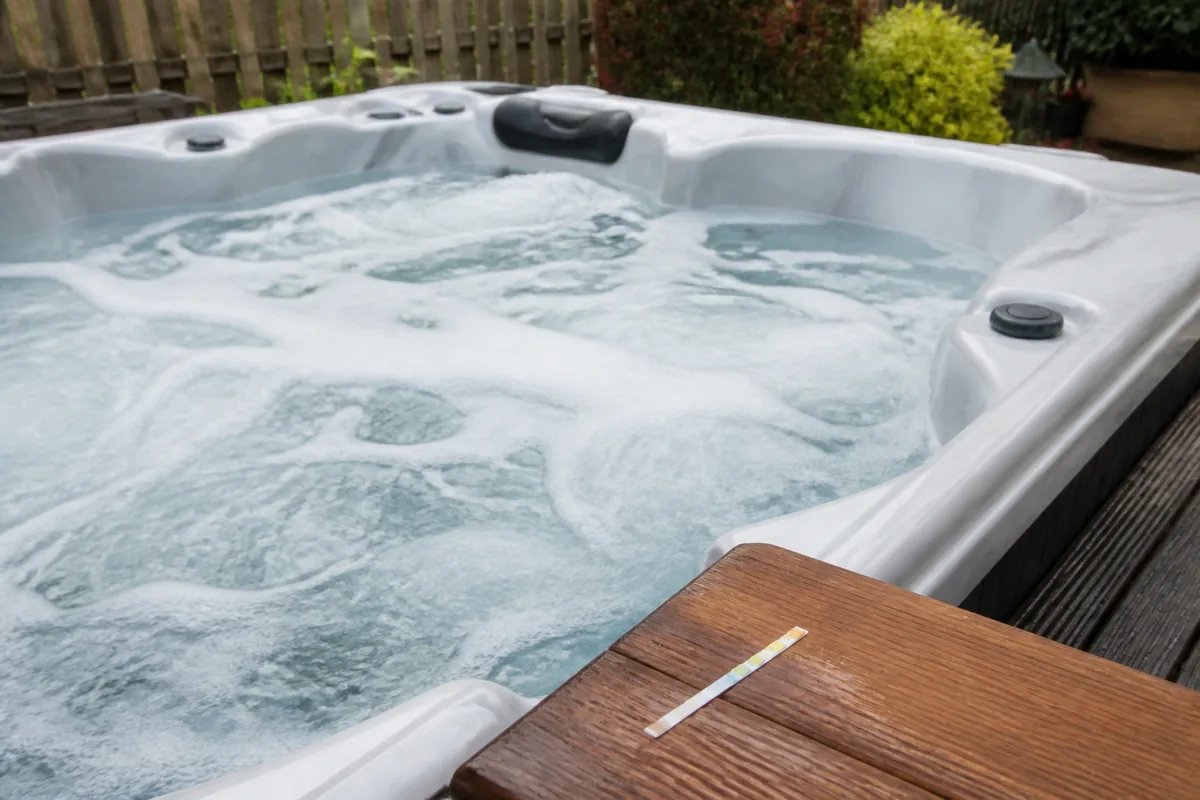
Foam by itself does not identify the cause or confirm that the water is safe. Check sanitizer and the other water conditions your manual or test system requires before using the spa. Jacuzzi’s own guidance treats a foam-covered spa as a reason to hold off on that evening’s soak until you’ve identified and addressed the cause, rather than assuming it’s fine to use as-is (Jacuzzi).
Safety note
This article is not medical advice. If you have a rash, skin irritation, or another health concern after using a hot tub, contact a healthcare provider. The guidance below is about water testing and maintenance decisions, not diagnosis or treatment.
What separates harmless bubbles from a reason to stay out
Sanitizer and pH are the starting point
Whatever else is going on, checking chlorine or bromine and pH is the fastest way to know whether the water is being sanitized as intended. The CDC recommends at least 3 ppm chlorine and a pH of 7.0 to 7.8 in home hot tubs (CDC), and separately recommends bromine at 4 to 8 ppm as part of its hot tub rash prevention guidance (CDC). Confirming those readings doesn’t identify why the foam is there, but it does tell you whether the water is being sanitized as intended, which is the more important question. If sanitizer and pH test correctly, foam from soap or lotion residue can be treated as a comfort and cosmetic issue rather than a sign the water itself is unsafe. If sanitizer is low or you can’t confirm it’s in range, treat that as the bigger concern, not the foam itself.
Foam from soap and lotion residue
Foam caused by bather products and detergent residue on swimwear is a documented cause on its own, separate from sanitizer levels. See Can Soap, Lotion, or Detergent Cause Hot Tub Foam? This kind of foam doesn’t, by itself, mean the water is contaminated with germs. It’s still worth confirming sanitizer and pH rather than assuming that’s the case, since foam of this kind can appear whether or not the water is otherwise being sanitized correctly.
Foam alongside signs of poor sanitation
The CDC’s guidance on hot tub rash (Pseudomonas folliculitis) links the condition to poorly maintained hot tubs and recommends checking chlorine, bromine, and pH with test strips whenever you’re unsure of water quality (CDC). Hot Spring’s own troubleshooting chart lists unsanitary water and free chlorine above 5 ppm as probable causes of skin irritation and rash, with maintaining sanitizer level and letting chlorine drop below 5 ppm before use as the listed solutions (Hot Spring). If foam appears together with a strong chemical smell, an unusual odor, or sanitizer readings you can’t confirm, that combination is a stronger reason to stay out than foam alone.
Foam right after a chemical addition
If foam showed up immediately after treating the water, wait for the product’s recommended interval and a full circulation cycle before deciding the water is ready to use. See Hot Tub Foam After Adding Chemicals: What Happened? for how to tell temporary aeration apart from a dosing issue.
Safe checks before deciding
- Test chlorine or bromine and pH before getting in, using test strips or a kit. See What to Look for in a Hot Tub Water Test Kit if you need help matching a kit to your sanitizer.
- Note whether the foam is new or ongoing. Foam that just appeared after a chemical addition is different from foam that’s been building for days.
- Check for a strong chemical smell. The CDC states a properly chlorinated hot tub has little odor, and that a strong chemical smell indicates a problem rather than proper sanitizing (CDC).
- Rule out recent bather habits, like swimsuits with detergent residue or heavy lotion use, as a simpler explanation.
- Don’t rely on foam appearance alone to judge the water. Test results are a more direct signal than how the surface looks.
When to stay out and get help
Stay out of the spa and don’t rely on a defoamer to make it “ready” if:
- You can’t confirm sanitizer and pH are in a safe range
- The water has a strong chemical smell or an unusual odor
- Free chlorine reads above 5 ppm and hasn’t come down after waiting
- Anyone in the household has had skin irritation or a rash after recent use, in which case checking with a healthcare provider is a reasonable next step
If foam and uncertainty about water quality keep recurring, the broader causes and fixes in Why Is My Hot Tub Water Foamy? are the place to start working through the problem systematically.
Sources
- Hot Tub Safety: Can You Soak in Cloudy Hot Tub Water? — Jacuzzi; Accessed 2026-07-31
Official Jacuzzi guidance treating a foam-covered spa as a reason to hold off on soaking until the cause is identified and addressed. Page title as published by Jacuzzi refers to cloudy water, but the article content and URL address foamy water specifically.
- Preventing Hot Tub Rash — Centers for Disease Control and Prevention (CDC); Accessed 2026-07-31
CDC guidance on hot tub rash (Pseudomonas folliculitis), its link to poorly maintained hot tubs, and recommended chlorine (at least 3 ppm), bromine (4 to 8 ppm), and pH (7.0 to 7.8) ranges.
- Home Pool and Hot Tub Water Treatment and Testing — Centers for Disease Control and Prevention (CDC); Accessed 2026-07-31
CDC guidance on chlorine (at least 3 ppm) and pH (7.0 to 7.8) targets for residential hot tubs. This page does not address bromine or odor.
- What You Can Do to Stay Healthy in Hot Tubs — Centers for Disease Control and Prevention (CDC); Accessed 2026-07-31
CDC guidance stating a properly chlorinated hot tub has little odor, and that a strong chemical smell indicates a problem.
- Hot Tub Water Care Troubleshooting Hot Tub Water Problems — Hot Spring Spas; Accessed 2026-07-31
Official Hot Spring troubleshooting chart listing unsanitary water and free chlorine above 5 ppm as probable causes of skin irritation and rash.
Related articles
Why Is My Hot Tub Water Foamy?
Foamy hot tub water can trace back to soap and body products, low calcium hardness, or old water. Here are the causes manufacturers document and what to check.
Read guideCan Soap, Lotion, or Detergent Cause Hot Tub Foam?
Yes. Manufacturer guidance names soap, lotion, and detergent residue from bathers and swimwear as documented causes of hot tub foam. Here's how it gets into the water.
Read guideHot Tub Foam After Adding Chemicals: What Happened?
Foam right after adding chemicals can come from jet aeration, the order products were added, or excess dosing. Here's how to tell these documented possibilities apart.
Read guide