Water Carediscoloration
Why Is My Hot Tub Water Discolored After Filling?
Water that changes color soon after a refill can come from metals or other contaminants in the fill water. Hot Spring guidance links iron, copper, and manganese in source water to staining and discoloration, and notes that metals can react with chlorine to produce green, turquoise, pink, or purple tones.
- By
- TubWise Editorial Team
- Published
- Last updated
- discolored water
- fill water
- metals
- iron
- copper
- water care
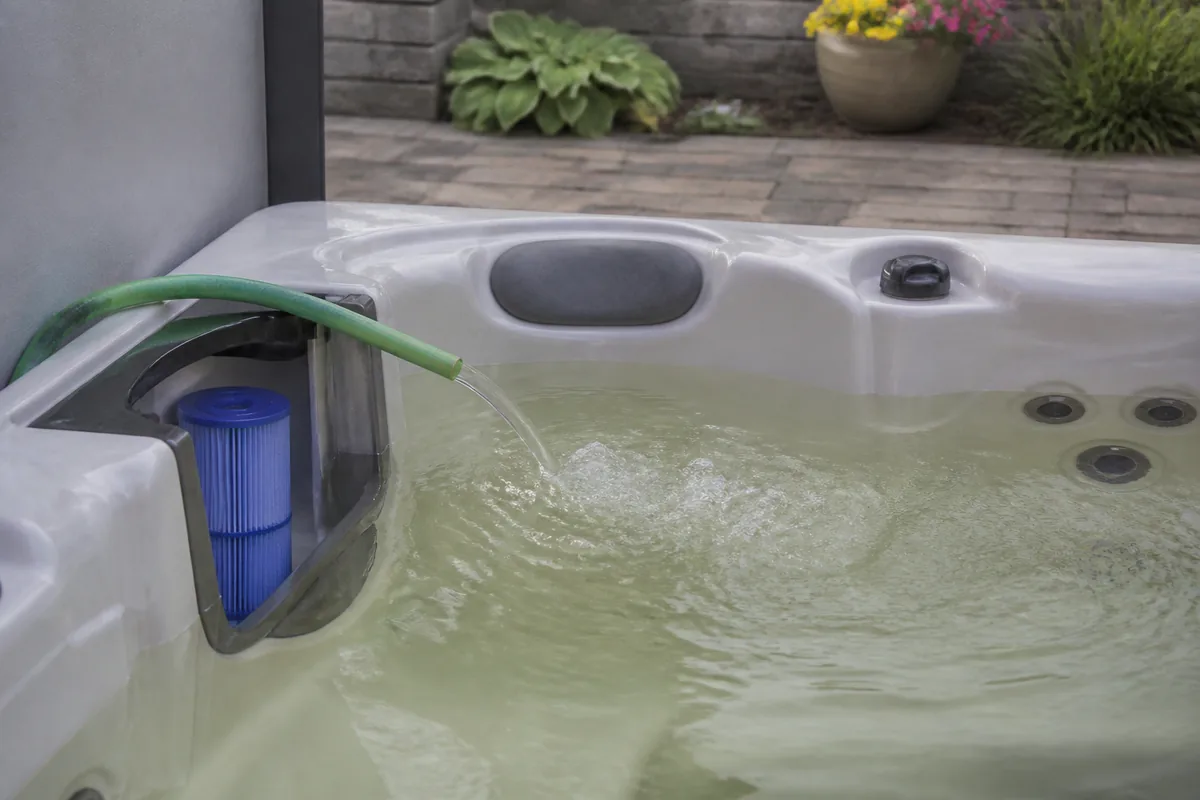
Discolored water soon after a refill often points to what came in with the fill water, not to a failed heater or pump. Hot Spring states that metals in tap or well water can interact with chlorine and turn spa water green, turquoise, pink, or purple (Hot Spring). The FreshWater Salt System owner’s manual also states that high metal content can cause staining and discolored water (Hot Spring FreshWater Salt Manual).
This article is about post-fill discoloration from source water. It does not treat any single tint, including yellow, as its own diagnosis. For green water that may involve algae as well as metals, see Why Is My Hot Tub Water Green?. For brown bulk water specifically, see Why Is My Hot Tub Water Brown?. For haze without a clear color cast, see Why Is My Hot Tub Water Cloudy?. For fill precautions when calcium is high, see How to Fill a Hot Tub With Hard Water.
Safety note
Color alone does not prove the spa is safe to use. Test sanitizer and pH before soaking. Follow your spa manual and chemical product labels. Do not mix different pool or spa chemicals. If you treat for metals, Hot Spring’s metals FAQ directs owners to wait 24 hours after FreshWater Stain & Scale before adding chlorine or other oxidizers (Hot Spring). Confirm amounts and wait times on the product label and your manual. FreshWater Salt System guidance also says not to use the spa until metal treatment is complete and chlorine is added (Hot Spring FreshWater Salt Manual).
Causes to check
Iron, copper, and manganese in fill water
Hot Spring’s Highlife Collection owner’s manual recommends a Clean Screen pre-filter at every fill and top-off to remove contaminants from fill water, especially iron, copper, and manganese, and notes that many sources, including well water, contain high mineral concentrations that can stain the shell and plastics (Hot Spring Highlife Manual). The same manual states that high iron or copper content may produce green or brown stains on the spa.
Hot Spring’s metals FAQ names iron or copper as examples of metals that can complicate spa water care depending on location or well water (Hot Spring). For FreshWater Salt System start-up, Hot Spring lists iron and manganese below 0.5 ppm and copper below 0.2 ppm before system start (Hot Spring FreshWater Salt Manual). Those thresholds are for that system’s documented start-up scope, not a universal rule for every spa.
Metals reacting after sanitizer is added
Hot Spring’s spa-chemicals FAQ states that metals such as iron and manganese in well water can interact with chlorine to discolor spa water, with examples including green, turquoise, pink, and purple tones (Hot Spring). If the water looked clearer during the fill and then changed after chlorine or another oxidizer went in, that timing matches this manufacturer description. It is still not proof of which metal is present. Test rather than guessing from color alone.
Tannins and other fill-water organics
The same Hot Spring FAQ states that the Clean Screen pre-filter also removes organic contaminants that can cause foam and tannins that can discolor the water (Hot Spring). Tannin-related discoloration is a fill-water issue, separate from algae growth that develops later from high pH and low sanitizer.
Low pH or alkalinity plus metals
Hot Spring’s troubleshooting chart lists stains with probable causes of total alkalinity and/or pH too low, and high iron or copper in source water, with solutions that include adjusting alkalinity or pH and using a metal deposit inhibitor (Hot Spring). Aggressive low-pH water and metals can both matter. Do not treat color as proof that chemistry is already balanced.
What this is not
- A waterline scum ring from oils and dirt is a surface film, not bulk-water discoloration after filling. See Why Is There a Ring Around My Hot Tub Waterline?.
- Heating problems after a refill are a separate equipment path. See Hot Tub Not Heating After a Refill.
Safe checks you can do
- Note when the color appeared. During fill, right after sanitizer, or days later. Post-sanitizer color change fits Hot Spring’s metal-and-chlorine description (Hot Spring).
- Test pH, alkalinity, and sanitizer first. Confirm whether chemistry is in your manual’s range before adding more products.
- Ask whether the fill used a pre-filter. Hot Spring recommends Clean Screen at fill and top-off for iron, copper, and manganese (Hot Spring Highlife Manual).
- If metals are confirmed or strongly suspected, follow metal-treatment sequencing. Hot Spring’s metals FAQ points to filling with Clean Screen, then using FreshWater Stain & Scale, then waiting 24 hours before chlorine or other oxidizers (Hot Spring). Use the amounts on your product label. FreshWater Salt System manuals add filter cleaning and system-off steps during metal treatment; follow that manual if you have that system.
- Do not fill from swimming-pool water. Hot Spring’s Highlife fill instructions say pool chemicals differ from spa chemicals and can damage the spa (Hot Spring Highlife Manual).
- Retest after any treatment wait time before soaking.
When to stop and get help
Stop adding oxidizers and stop guessing from color if:
- Discoloration continues after a labeled metal treatment and the wait time your brand requires
- You cannot confirm sanitizer and pH in range
- Green water may involve algae as well as metals (Why Is My Hot Tub Water Green?)
- Staining on the shell returns after cleaning
Contact your dealer or a qualified spa technician, especially for well water with unknown metal content. For drain timing after a failed refill, see How Often Should You Drain and Refill a Hot Tub?.
Sources
- How Do I Choose The Right Spa Chemicals For My Hot Tub? — Hot Spring Spas; Accessed 2026-08-03
Hot Spring FAQ stating metals can interact with chemical stabilizers and chlorine to discolor spa water (green, turquoise, pinks, and purples); Clean Screen pre-filter removes copper, iron, organics that cause foam, and tannins that discolor water.
- How Do I Reduce Metals In My Water? — Hot Spring Spas; Accessed 2026-08-03
Hot Spring FAQ on iron or copper in well or local water; Clean Screen fill guidance; FreshWater Stain & Scale after fill; wait 24 hours before chlorine or other oxidizers.
- Highlife Collection Owner's Manual — Hot Spring Spas / Watkins Wellness; Accessed 2026-08-03
Highlife Collection owner's manual: Clean Screen at every fill/top-off for iron, copper, and manganese; high iron or copper may produce green or brown stains; troubleshooting Stains row lists high iron or copper in source water.
- FreshWater Salt System Owner's Manual (USA) — Hot Spring Spas / Watkins Wellness; Accessed 2026-08-03
FreshWater Salt System manual stating high metal content can cause staining and discolored water; iron and manganese below 0.5 ppm and copper below 0.2 ppm before salt-system startup; metal treatment wait before chlorine.
- Hot Tub Water Care Troubleshooting Hot Tub Water Problems — Hot Spring Spas; Accessed 2026-08-03
Official Hot Spring troubleshooting chart Stains row: total alkalinity and/or pH too low; high iron or copper in source water; adjust TA/pH and use a metal deposit inhibitor.
Related articles
Why Is My Hot Tub Water Green?
Green hot tub water can point to algae from low sanitizer and high pH, or dissolved iron and copper. Here's how manufacturers describe telling them apart.
Read guideWhy Is My Hot Tub Water Cloudy?
Cloudy hot tub water can trace back to water chemistry, sanitizer, filtration, or old water. Here's how to narrow it down and when to stop using the spa.
Read guideHow Often Should You Drain and Refill a Hot Tub?
Most traditional spa water care schedules call for a drain and refill every three to four months. Salt systems and heavy use can change that interval.
Read guideHot Tub Not Heating After a Refill
Hot tub not heating right after a refill? Trapped air in the plumbing is the most common cause. Here's how to check and purge it safely.
Read guideWhy Is There a Ring Around My Hot Tub Waterline?
A hot tub waterline ring is often oils and dirt at the surface. Here's how Hot Spring and Jacuzzi describe scum rings, scale deposits, and safe cleanup.
Read guideWhy Do My Hot Tub Surfaces Feel Slimy?
Slimy or slippery hot tub seats, walls, or jets are a manufacturer-listed cue to drain and clean. Here's what Jacuzzi says, without guessing at biofilm.
Read guide