Water Carewater-odor
Why Does My Hot Tub Water Smell Bad?
A bad hot tub smell is not one single problem. Hot Spring's troubleshooting chart links general water odor to excess organics, improper sanitization, and low pH, and treats a musty odor as a separate cue that may involve bacteria or algae growth.
- By
- TubWise Editorial Team
- Published
- Last updated
- bad smell
- water odor
- musty odor
- water care
- sanitizer
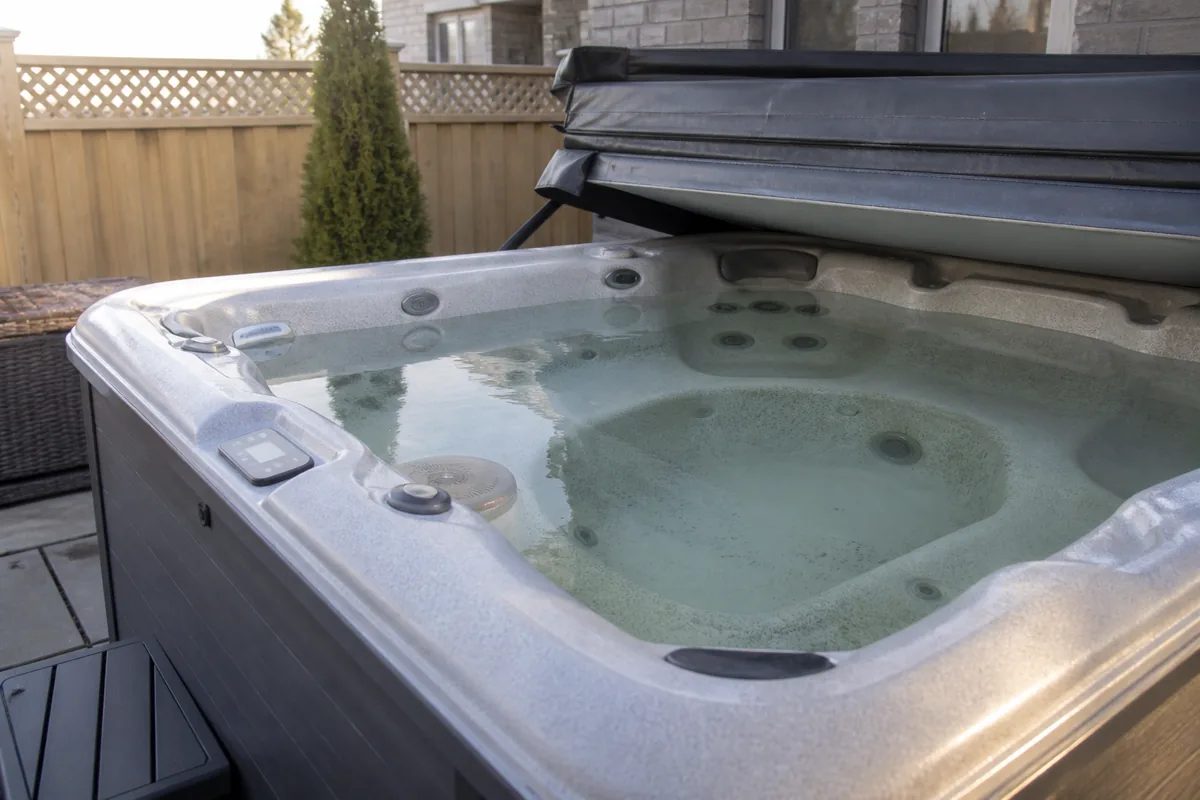
A bad hot tub smell is not proof of one failed part or one wrong chemical. Hot Spring’s troubleshooting chart treats water odor, chlorine odor, and musty odor as separate problems with different probable causes (Hot Spring). Jacuzzi likewise treats funky or musty odor as a cue to test the water, not to guess from appearance alone (Jacuzzi).
If the smell is specifically a sharp “chlorine” smell, start with Why Does My Hot Tub Smell Like Chlorine?. This article covers broader bad or musty water odor. If the odor is strongest on the cover vinyl or underside rather than in the water, see Why Does My Hot Tub Cover Smell Bad?.
Safety note
Odor alone does not prove the spa is safe or unsafe. Jacuzzi notes that funky smell can appear even when the water looks clear and clean (Jacuzzi). Stay out if you cannot confirm sanitizer and pH are in range, or if someone became ill in the water. Jacuzzi treats illness in the water, visible biofilm, and algae growth as reasons for a full drain and clean (Jacuzzi). Follow product labels. Do not mix different pool or spa chemicals. Confirm dosing from the label and your spa’s water volume.
Causes to check
Excess organics and improper sanitization
Hot Spring lists excessive organics in the water and improper sanitization among the probable causes of water odor, with corrective actions that include shocking with sanitizer and adding sanitizer (Hot Spring). Body oils, sweat, and other bather waste load the water. When sanitizer cannot keep up, odor can build even before the water looks cloudy. For cloudy haze as a separate symptom, see Why Is My Hot Tub Water Cloudy?.
Low pH
Hot Spring also lists low pH as a probable cause of water odor and directs owners to adjust pH into the recommended range (Hot Spring). Test before you add products. Adjusting without a reading can push chemistry further off target. Target ranges vary by brand and sanitizer system, so check your manual and the product label.
Musty odor and visible growth
Hot Spring treats musty odor separately from general water odor. Its chart links musty odor to bacteria or algae growth and directs owners to shock with sanitizer; if the problem is visible or persistent, drain, clean, and refill (Hot Spring). Jacuzzi describes a musty hot tub odor as a sign that there is not enough sanitizer in the water (Jacuzzi). Green water is a different look and may involve algae or metals; see Why Is My Hot Tub Water Green?.
Old water and surface buildup
Jacuzzi lists a musty, stale odor among prompts to drain and clean (Jacuzzi). Oils and dirt can also leave a ring at the waterline even when odor is the main complaint. See Why Is There a Ring Around My Hot Tub Waterline? and How Often Should You Drain and Refill a Hot Tub?.
Safe checks you can do
- Describe the smell. Sharp chemical “chlorine” odor is a different chart row than musty or general water odor on Hot Spring’s guide. Use the chlorine article if that matches what you smell.
- Test the water first. Check sanitizer, pH, and alkalinity before adding products. See How Often Should You Test Hot Tub Water? for cadence guidance.
- Compare readings to your manual. CDC residential guidance recommends at least 3 ppm chlorine or 4–8 ppm bromine in home hot tubs, with pH of 7.0–7.8 (CDC). Your brand may publish different targets.
- Shock only as the label directs. Hot Spring’s water-odor and musty-odor rows both include shocking with sanitizer (Hot Spring). Do not invent a dose. Use the product label and known spa volume.
- Check the filter and water age. Dirty filtration and aged water can leave organics in the spa. Clean or replace the filter per your manual, and consider a drain if the water is overdue for a change.
- Retest before soaking. Confirm sanitizer and pH again after corrections have had time to circulate.
When to stop and get help
Stop using the spa and do not keep stacking chemicals if:
- Musty odor remains after you have shocked as directed and retested, matching Hot Spring’s “visible or persistent” drain-and-clean guidance (Hot Spring)
- Someone became ill in the water, or you see biofilm or algae (Jacuzzi); slimy seats or walls have a separate check path in Why Do My Hot Tub Surfaces Feel Slimy?
- You cannot bring sanitizer and pH into the ranges your manual and product labels require
- Odor returns quickly after every correction
In those cases, drain and clean per your spa manual, or contact your dealer or a qualified spa technician. For cloudy water that will not clear after chemistry and filtration checks, see Should You Drain a Hot Tub if the Water Is Cloudy?.
Sources
- Hot Tub Water Care Troubleshooting Hot Tub Water Problems — Hot Spring Spas; Accessed 2026-08-03
Official Hot Spring troubleshooting chart with separate rows for Water Odor, Chlorine Odor, and Musty Odor, including probable causes and corrective actions.
- Fix Your Hot Tub with This Complete Troubleshooting Guide — Hot Spring Spas; Accessed 2026-08-03
Hot Spring consumer troubleshooting guide that restates water odor, chlorine odor, and musty odor causes and fixes.
- Signs and Symptoms Your Hot Tub Water Needs Maintenance — Jacuzzi; Accessed 2026-08-03
Jacuzzi guidance that funky spa odor can signal bacteria even when water looks clear, and that a musty odor can point to insufficient sanitizer.
- How to Drain a Spa — Jacuzzi; Accessed 2026-08-03
Jacuzzi drain guidance listing a strong chemical smell or musty, stale odor among prompts to drain and clean, and noting contamination events as reasons for a full drain and clean.
- Preventing Swimming-related Illnesses — Centers for Disease Control and Prevention (CDC); Accessed 2026-08-03
CDC public health guidance on warning signs and keeping recreational water safer.
- Home Pool and Hot Tub Water Treatment and Testing — Centers for Disease Control and Prevention (CDC); Accessed 2026-08-03
CDC residential guidance on chlorine and pH targets for home hot tubs.
Related articles
Why Does My Hot Tub Smell Like Chlorine?
A strong chlorine smell in a hot tub often points to chloramines and low pH, not proof that free chlorine is high. Here's what manufacturer manuals say.
Read guideWhy Do My Hot Tub Surfaces Feel Slimy?
Slimy or slippery hot tub seats, walls, or jets are a manufacturer-listed cue to drain and clean. Here's what Jacuzzi says, without guessing at biofilm.
Read guideWhy Is There a Ring Around My Hot Tub Waterline?
A hot tub waterline ring is often oils and dirt at the surface. Here's how Hot Spring and Jacuzzi describe scum rings, scale deposits, and safe cleanup.
Read guideHow Often Should You Test Hot Tub Water?
CDC guidance says test hot tub chlorine and pH at least twice a day. Manufacturer maintenance schedules may list weekly or twice-weekly checks. Here's how to use both.
Read guideHow Often Should You Drain and Refill a Hot Tub?
Most traditional spa water care schedules call for a drain and refill every three to four months. Salt systems and heavy use can change that interval.
Read guideWhy Is My Hot Tub Water Cloudy?
Cloudy hot tub water can trace back to water chemistry, sanitizer, filtration, or old water. Here's how to narrow it down and when to stop using the spa.
Read guide