Water Carewater-odor
Why Does My Hot Tub Smell Like Chlorine?
A strong chlorine smell is not the same as free chlorine doing its job. Hot Spring manuals explain that free available chlorine has little odor, while combined chlorine (chloramines) has a strong chlorine odor that shocking can help clear, and Hot Spring's chart also lists low pH with high chloramines.
- By
- TubWise Editorial Team
- Published
- Last updated
- chlorine smell
- chloramines
- water odor
- water care
- sanitizer
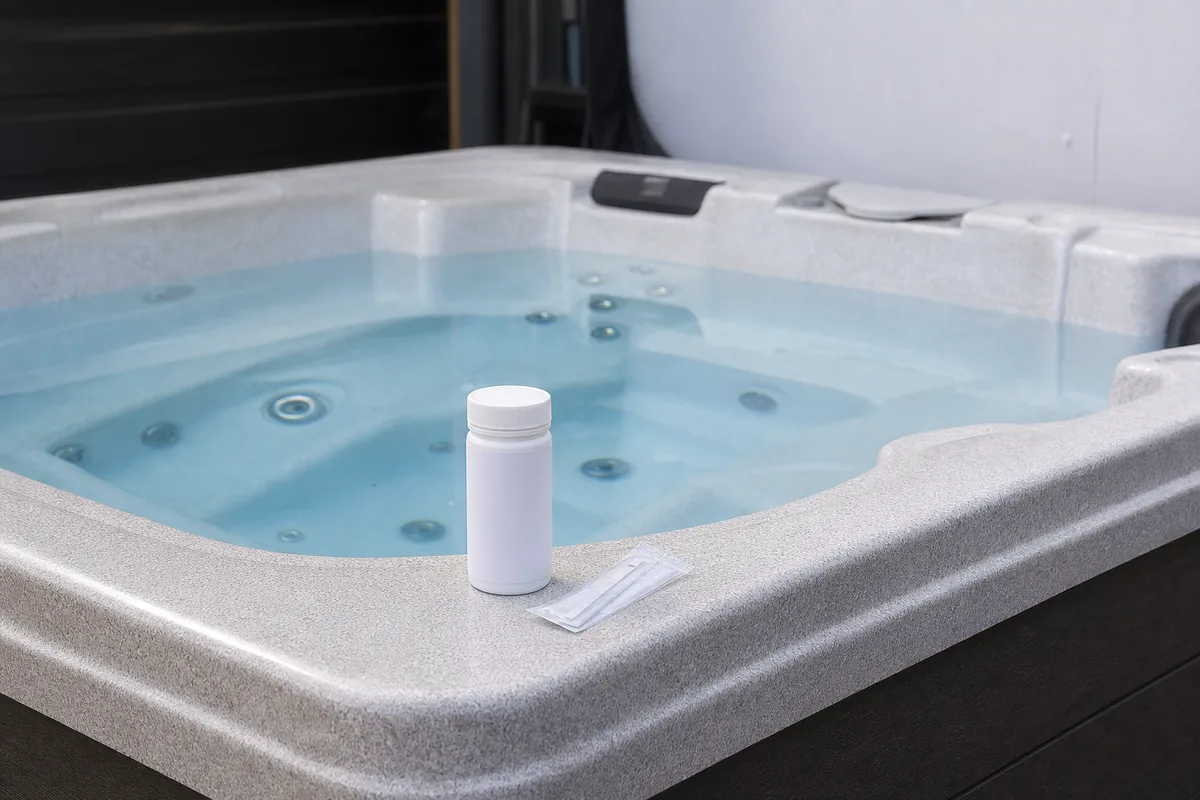
A hot tub that smells strongly of chlorine is not automatic proof that free chlorine is too high. The Hot Spring Highlife Collection owner’s manual states that free available chlorine (FAC) does not have an odor, while combined spent chlorine (chloramines) has a strong chlorine odor that shocking can help eliminate (Hot Spring Highlife Manual). Hot Spring’s troubleshooting chart lists chlorine odor as a separate row from general water odor and musty odor (Hot Spring).
For musty, stale, or non-chlorine bad smells, see Why Does My Hot Tub Water Smell Bad?.
Safety note
A strong chemical smell can be a warning sign, not a comfort cue. The CDC notes that a strong chemical smell, rather than little to no odor, can itself signal a problem in home pool and hot tub water (CDC). Test before you soak. Follow your spa manual and chemical product labels. Do not mix different pool or spa chemicals. Do not invent shock doses; use the label and your known water volume.
What “chlorine smell” can mean
Chloramines (combined chlorine)
Hot Spring’s Highlife manual defines the strong chlorine smell as combined spent chlorine, also called chloramines, and directs owners who smell chlorine to super chlorinate or shock the spa (Hot Spring Highlife Manual). The same manual’s water terminology explains that chloramines form when chlorine combines with nitrogen from body oils, urine, perspiration, and similar waste, and that chloramines are weaker, slower sanitizers.
Hot Spring’s public troubleshooting chart matches that framing: chlorine odor with chloramine level too high, corrected by shocking with sanitizer (Hot Spring).
Low pH alongside chloramines
The same Hot Spring chart also lists low pH as a probable cause of chlorine odor and directs owners to adjust pH into the recommended range (Hot Spring). Test pH before and after corrections. Ranges vary by brand and product line, so confirm targets in your own manual.
A “chemical” scent versus musty odor
Jacuzzi separates funky or musty odor from a more chemical scent. Its signs-and-symptoms page says a chemical scent can relate to sanitizer buildup and points owners toward Jacuzzi Spa Shock Oxidizer for that challenge (Jacuzzi). That is brand-product language. Use the oxidizer or shock product your spa and water-care system allow, at the dose on that product’s label.
Chlorine versus bromine systems
This article focuses on chlorine odor language from chlorine-oriented Hot Spring guidance. If your spa uses bromine, follow the bromine product label and your spa manual rather than assuming the same odor cues apply the same way. For a high-level comparison of systems, see Chlorine vs Bromine for Hot Tubs.
Safe checks you can do
- Test free chlorine, pH, and alkalinity first. A strong smell is not a substitute for a reading. See How Often Should You Test Hot Tub Water?.
- Compare to your manual’s targets. CDC residential guidance recommends at least 3 ppm chlorine for home hot tubs and pH of 7.0–7.8 (CDC). Hot Spring Highlife guidance for FAC chlorine discusses a 3–5 ppm FAC range in that manual’s chlorine section (Hot Spring Highlife Manual). Use your own manual if it differs.
- Shock as directed if chloramines are the concern. Hot Spring’s chlorine-odor row and Highlife manual both point to shocking or super chlorination when the spa smells of chlorine (Hot Spring; Hot Spring Highlife Manual). Follow the shock product label. Do not stack multiple oxidizers.
- Adjust pH if it is low. Hot Spring lists low pH with chlorine odor (Hot Spring). Use pH adjusters only as labeled.
- Reduce bather waste load. Chloramines form from chlorine plus nitrogen waste. A brief rinse-off shower before soaking reduces oils and lotions entering the water. If foam appears after chemicals, see Hot Tub Foam After Adding Chemicals.
- Retest before use. Confirm free chlorine and pH after the water has circulated and the shock product has had the contact time its label requires.
When to stop and get help
Stop soaking and stop adding more sanitizer if:
- Free chlorine and pH remain outside the ranges your manual requires after labeled corrections
- The strong chemical smell persists after a proper shock and pH check
- Eyes or skin are irritated and chemistry will not stabilize
- Water is also cloudy or otherwise unsafe-looking after chemistry and filtration checks (Why Is My Hot Tub Water Cloudy?)
In those cases, drain and refill per your spa manual, or contact your dealer or a qualified spa technician. See How Often Should You Drain and Refill a Hot Tub? for drain timing context.
Sources
- Highlife Collection Owner's Manual — Hot Spring Spas / Watkins Wellness; Accessed 2026-08-03
Highlife Collection owner's manual stating that if the spa smells of chlorine, super chlorinate or shock; FAC chlorine does not have an odor, while combined spent chlorine (chloramines) has a strong chlorine odor that can be eliminated by shocking.
- Hot Tub Water Care Troubleshooting Hot Tub Water Problems — Hot Spring Spas; Accessed 2026-08-03
Official Hot Spring troubleshooting chart listing Chlorine Odor causes as chloramine level too high and low pH, with shock and pH adjustment as solutions.
- Fix Your Hot Tub with This Complete Troubleshooting Guide — Hot Spring Spas; Accessed 2026-08-03
Hot Spring consumer guide restating chlorine odor as high chloramines and low pH.
- Signs and Symptoms Your Hot Tub Water Needs Maintenance — Jacuzzi; Accessed 2026-08-03
Jacuzzi guidance distinguishing funky or musty odor from a more chemical scent, and pointing owners to shock oxidizer products labeled for their brand.
- Home Pool and Hot Tub Water Treatment and Testing — Centers for Disease Control and Prevention (CDC); Accessed 2026-08-03
CDC residential guidance noting that a strong chemical smell (rather than little to no odor) can be a sign of a problem, and listing chlorine and pH targets for home hot tubs.
Related articles
Why Does My Hot Tub Water Smell Bad?
Bad hot tub odor can come from organics, low sanitizer, low pH, or bacteria growth. Here's how manufacturers separate musty smells from chemistry issues.
Read guideWhy Do My Hot Tub Surfaces Feel Slimy?
Slimy or slippery hot tub seats, walls, or jets are a manufacturer-listed cue to drain and clean. Here's what Jacuzzi says, without guessing at biofilm.
Read guideChlorine vs Bromine for Hot Tubs: How to Choose
Compare chlorine and bromine as hot tub sanitizer systems using manufacturer guidance. Choose one system and follow the label.
Read guideHow Often Should You Test Hot Tub Water?
CDC guidance says test hot tub chlorine and pH at least twice a day. Manufacturer maintenance schedules may list weekly or twice-weekly checks. Here's how to use both.
Read guideHow Often Should You Drain and Refill a Hot Tub?
Most traditional spa water care schedules call for a drain and refill every three to four months. Salt systems and heavy use can change that interval.
Read guideWhy Is My Hot Tub Water Cloudy?
Cloudy hot tub water can trace back to water chemistry, sanitizer, filtration, or old water. Here's how to narrow it down and when to stop using the spa.
Read guide