Water Caredraining
Should You Drain a Hot Tub if the Water Is Cloudy?
Draining is not the first step manufacturer guidance points to for cloudy water. It's described as the next step after water chemistry has been corrected, the filter is clean, and cloudiness still persists, or when the water is old enough that total dissolved solids may exceed the level a manufacturer recommends.
- By
- TubWise Editorial Team
- Published
- Last updated
- cloudy water
- draining a hot tub
- water care
- total dissolved solids
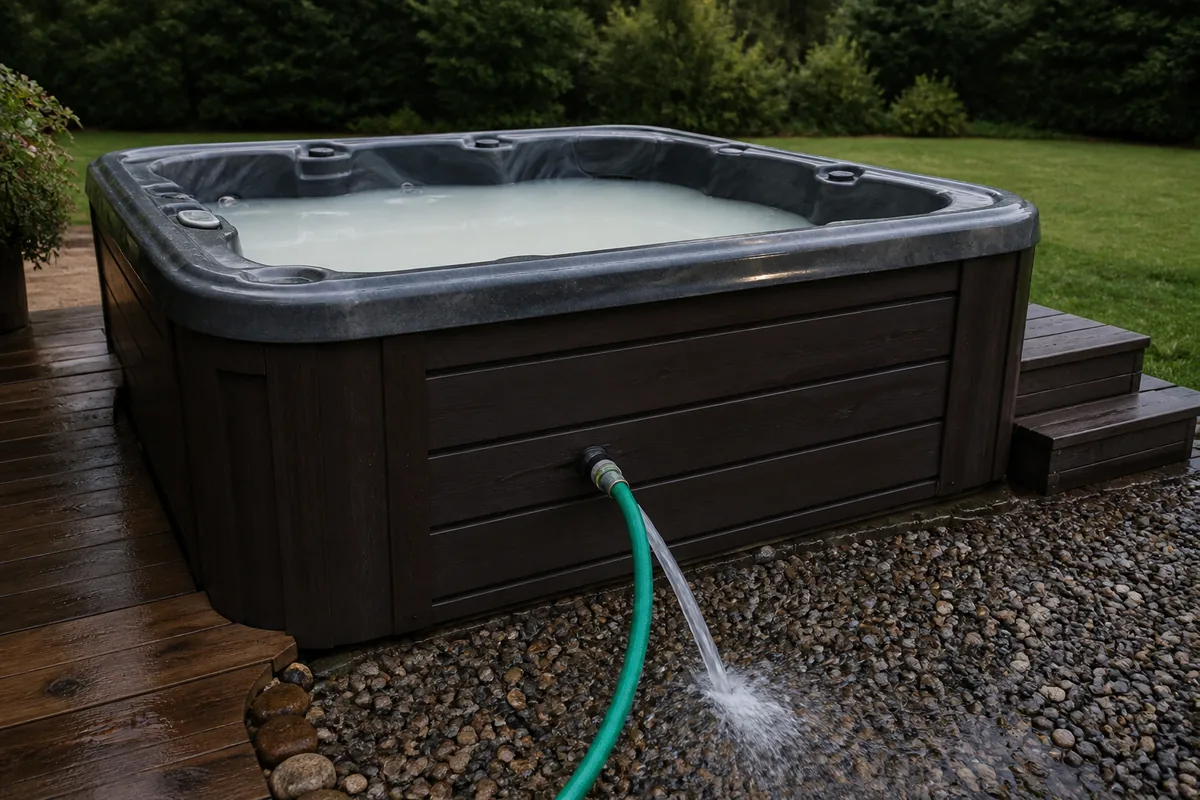
Not always, and not as a first step. Manufacturer guidance treats draining as one of several possible fixes for cloudy water, used after chemistry has been corrected and the filter is clean, not instead of checking those things first. Draining does make sense when cloudiness persists despite correct treatment, or when the water is old enough that dissolved mineral content (TDS) may have built up beyond the level a manufacturer recommends.
Safety note
Cloudy water can be more than a look-and-feel issue. The CDC lists unusually cloudy water as a warning sign of possible elevated germ levels (CDC). If you’re not confident the water is safe and can’t quickly confirm sanitizer and pH are correct, stay out of the spa while you work through the checks below.
When manufacturers point toward draining
Cloudiness persists despite correct treatment
Jacuzzi’s troubleshooting guidance is direct: “Sometimes, the best solution for persistent cloudy water is to drain and refill your hot tub,” and lists ongoing cloudiness despite treatment as a sign it may be time to do so (Jacuzzi). The key word is despite—this applies after you’ve already corrected chemistry and cleaned the filter, not as a substitute for doing so.
High total dissolved solids (TDS)
Jacuzzi ties persistent cloudiness to high total dissolved solids, and its setup guide recommends a full drain and refill every 3–4 months, or sooner if TDS exceeds 2,000 ppm (Jacuzzi). TDS builds up gradually from minerals, chemical byproducts, and everything else dissolved in the water over time. Manufacturer guidance points to draining and refilling when dissolved solids have built up beyond the recommended level, rather than to filtration or shock treatment. If you have a TDS-capable test kit or strip, a high reading is a more objective signal than appearance alone.
It’s been a while since the last drain
Hot Spring’s own troubleshooting chart lists “drain, clean and refill the spa” as one of several solutions for cloudy water, alongside chemistry and filter fixes (Hot Spring). If you can’t remember when the spa was last drained, or it’s been longer than your manufacturer’s recommended interval, old water is worth ruling out as a possible explanation. For scheduled drain intervals (including salt-system caveats), see How Often Should You Drain and Refill a Hot Tub?.
When draining isn’t the first step
Manufacturer troubleshooting sequences check chemistry and the filter before recommending a drain, not after. If you haven’t yet:
- Tested and corrected pH, alkalinity, and sanitizer
- Cleaned or replaced the filter. See Can a Dirty Filter Make Hot Tub Water Cloudy?
- Given the water a full circulation cycle after those corrections. See How Long Does It Take Cloudy Hot Tub Water to Clear?
…it’s worth doing those first. If the cloudiness started right after you added chemicals, see Hot Tub Water Cloudy After Adding Chemicals before assuming a drain is needed. The cause can be the order or amount of product used, not the water itself. Draining and refilling a spa takes time and, depending on your water source, may need a fresh round of startup chemicals. It’s a reasonable fallback, not a shortcut around basic troubleshooting.
Jacuzzi’s setup guide also recommends testing your fill water source before adding any chemicals, since well water can need different treatment than municipal tap water, and using a hose filter attachment when refilling to reduce metals and minerals going into the spa (Jacuzzi). Draining doesn’t fix a source-water problem on its own if the same untreated water goes right back in.
Safe checks the homeowner can do
- Rule out chemistry and filter causes first, using the checks in Why Is My Hot Tub Water Cloudy?
- Check a TDS reading if you can. A high result supports draining over further chemical treatment.
- Note how long it’s been since the last drain. Compare it against your owner’s manual’s recommended interval.
- If you decide to drain, follow your owner’s manual for the shutoff, drain, and refill procedure, and clean the shell before refilling.
- Use a hose filter attachment when refilling if you have one, to reduce the metals and minerals introduced from your tap water.
- Test your fill water before adding chemicals. Well water and municipal tap water can need different treatment, so a baseline reading helps avoid over- or under-dosing from the start.
- Rebalance from scratch after refilling (total alkalinity, then pH, then sanitizer) rather than assuming old settings still apply to fresh water.
When to stop and call a technician
Draining and refilling is a normal homeowner maintenance task, but call a technician instead if:
- The water is cloudy again shortly after a full drain and refill with correct chemistry
- You notice unusual smells, discoloration, or debris that a drain doesn’t resolve. For loose floor debris between drains, a spa vacuum is optional cleanup, not a substitute for draining; see How to Choose a Hot Tub Vacuum
- You’re unsure how to safely access or operate your spa’s drain valve, or your manual directs you to a technician for this model
Persistent problems after a full drain point toward equipment or plumbing rather than the water itself, and are best handled by qualified service.
Sources
- Troubleshooting Cloudy Hot Tub Water: Causes and Solutions — Jacuzzi; Accessed 2026-07-30
Official Jacuzzi guide describing persistent cloudiness despite treatment, and high total dissolved solids (TDS), as signs it's time to drain and refill.
- Complete Beginner's Guide to Setting Up Your Jacuzzi — Jacuzzi; Accessed 2026-07-30
Official Jacuzzi guide recommending a full drain and refill every 3-4 months, or sooner if TDS exceeds 2,000 ppm.
- Hot Tub Water Care Troubleshooting Hot Tub Water Problems — Hot Spring Spas; Accessed 2026-07-30
Official Hot Spring troubleshooting chart listing drain, clean, and refill as one of several solutions for cloudy water, alongside chemistry and filter fixes.
- Preventing Swimming-related Illnesses — Centers for Disease Control and Prevention (CDC); Accessed 2026-07-30
Public health guidance identifying unusually cloudy water as a warning sign of elevated germ levels.
Related articles
Why Is My Hot Tub Water Cloudy?
Cloudy hot tub water can trace back to water chemistry, sanitizer, filtration, or old water. Here's how to narrow it down and when to stop using the spa.
Read guideHow Often Should You Drain and Refill a Hot Tub?
Most traditional spa water care schedules call for a drain and refill every three to four months. Salt systems and heavy use can change that interval.
Read guideHot Tub Water Cloudy After Adding Chemicals
If your hot tub turned cloudy right after adding chemicals, the cause can be the order, amount, or mix of products used. Here's what to check.
Read guideHow Long Does It Take Cloudy Hot Tub Water to Clear?
There's no single fixed timeline. How long cloudy hot tub water takes to clear depends on the cause and how completely you've corrected it.
Read guideCan a Dirty Filter Make Hot Tub Water Cloudy?
Yes. A dirty or clogged filter is a documented cause of cloudy hot tub water. Here's how to tell if your filter is the cause and how to check it safely.
Read guide