Maintenancecovers
When Should You Replace a Hot Tub Cover?
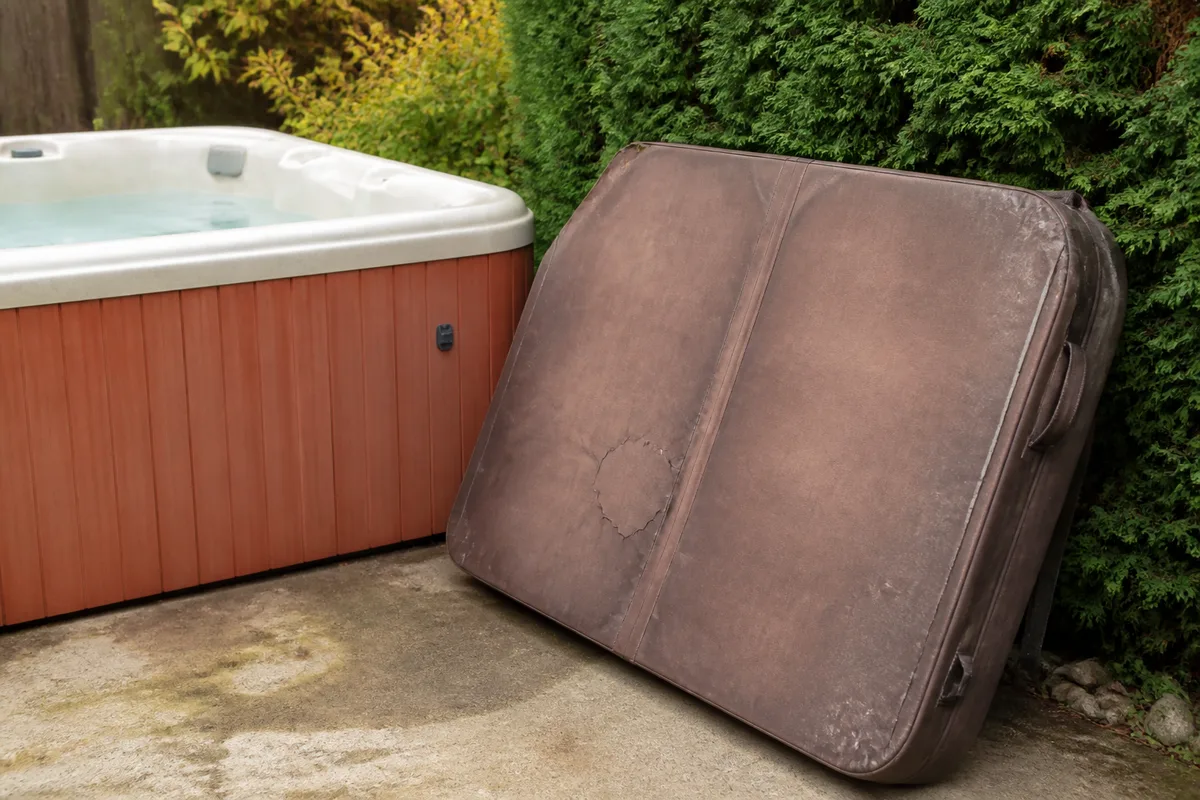
Hot Spring tells owners to inspect the cover monthly and replace it for breaks, cracks, tears, fading, sagging, or a waterlogged foam core. Jacuzzi lists sagging, waterlogging, and cracked or torn vinyl among replacement signs. There is no single universal cover lifespan that applies to every spa.
- By
- TubWise Editorial Team
- Published
- Last updated
- replace hot tub cover
- spa cover
- cover lifespan
- maintenance
Direct answer
Replace a hot tub cover when manufacturer wear signs show up: visible damage, sagging that breaks the seal, a cover that has grown waterlogged and much heavier, or a musty foam-core odor that cleaning does not fix (Hot Spring; Jacuzzi). Hot Spring says covers are designed to last a long time but will show weather wear, and it asks owners to inspect monthly for warning signs (Hot Spring). There is no single universal lifespan for every cover and climate.
Safety note
Do not walk, stand, or sit on a failing cover, and do not leave children or pets unsupervised around an unsecured spa (Hot Spring; Hot Spring Highlife owner’s manual). Hot Spring describes child-safety locks on replacement covers as hardware that helps prevent kids from entering without supervision, not as a guarantee that any cover makes the spa childproof (Hot Spring). Follow your spa and cover manuals for straps, locks, snow limits, and lifters. If a cover is badly waterlogged, Jacuzzi’s winter FAQ says it can weigh over 200 pounds and may damage the spa shell if not removed promptly (Jacuzzi).
There is no universal cover lifespan
Hot Spring says a well-made cover can remain in peak condition for several years, and that nothing lasts forever (Hot Spring). Hot Spring’s replacement-cover shop page adds that covers exposed to the elements will eventually need replacement and should be inspected yearly for wear and a tight seal (Hot Spring).
Jacuzzi’s swim-spa cover page states that a cover should typically be replaced every 4 to 6 years, or sooner if it becomes heavy, cracked, or difficult to lift (Jacuzzi). That 4-to-6-year figure is Jacuzzi swim-spa guidance on that page. Do not treat it as TubWise’s universal rule for every hot tub cover.
Warranty length, foam density, and climate claims belong to the seller’s written terms for the cover you buy. Compare those documents when you order; see How to Choose a Hot Tub Cover.
Replacement signs manufacturers list
Visible damage
Hot Spring says to replace the cover if you see breaks, cracks, tears, fading, or a dry, brittle texture (Hot Spring). Jacuzzi lists cracked or torn vinyl and weakened stitching as reasons steam escapes and debris enters (Jacuzzi).
Sagging or warping
Hot Spring includes sagging in its replace-if list and asks whether the cover still lies flat (Hot Spring). Jacuzzi lists sagging or warping among main replacement signs and links that shape change to lost insulation performance (Jacuzzi). Details: Why Is My Hot Tub Cover Sagging?.
Waterlogged or much heavier
Hot Spring defines waterlogging as vapor-barrier failure that lets the inner foam absorb water, and it treats that condition as a replacement issue (Hot Spring). Hot Spring also describes a cover that has grown noticeably heavier over time as water weight in the foam (Hot Spring). Jacuzzi describes an unusually heavy cover as likely waterlogged and hard to handle (Jacuzzi). Confirm the top is clear of rain and snow before you judge foam weight; see Why Is My Hot Tub Cover So Heavy? and Why Is Water Pooling on My Hot Tub Cover?.
Musty smell tied to the cover foam
Hot Spring lists a must or mold smell among replacement cues and says it might indicate mold inside the foam core (Hot Spring). Clean surface mildew first with allowed methods; see Why Does My Hot Tub Cover Smell Bad? and How to Clean a Hot Tub Cover.
Care that delays replacement
Hot Spring’s cover-life tips include mild soap cleaning, leaving the cover off about half an hour after adding water chemicals, keeping snow and ice off, never using the cover as a table, and using a lifter or a helper instead of dragging the cover (Hot Spring). Hot Spring’s annual maintenance list includes inspecting the cover for mildew, moisture, and physical damage (Hot Spring). Jacuzzi likewise points owners to monthly cleaning and regular inspections (Jacuzzi).
Those steps help the cover you have. They do not turn a waterlogged foam core back into a new cover.
Safe checks before you order
- Inspect monthly for Hot Spring’s warning signs (Hot Spring).
- Do an annual moisture and mildew look (Hot Spring).
- Clear exterior water and snow, then recheck weight and shape.
- Confirm straps, locks, and handles still work.
- Measure or order by spa brand and model so the replacement seals; use How to Choose a Hot Tub Cover.
- Ask the dealer about warranty scope for foam, vinyl, and stitching on the cover you are buying.
When to call a dealer now
- The cover is waterlogged or damaged in freezing weather and Jacuzzi’s immediate-replacement guidance applies to your situation (Jacuzzi)
- You cannot lift the cover safely even with two people
- Lock straps or handles have failed and the spa cannot be secured as your manual requires
- Tears expose foam or the vapor barrier
A cover that no longer seals can also raise heating demand and overnight evaporation. If the waterline drops while the spa sits covered and idle, see Hot Tub Losing Water Overnight: Leak or Evaporation?. To estimate electricity use from wattage and runtime assumptions, see the Hot Tub Electricity Cost Calculator. That tool does not prove a cover will lower your bill.
Sources
- When Should I Replace My Spa Cover? — Hot Spring Spas; Accessed 2026-08-03
Official Hot Spring blog. Covers designed to last a long time but show wear; inspect monthly. Replace for breaks, cracks, tears, fading, sagging, dry/brittle texture, or waterlogged foam after vapor-barrier failure. Care tips: mild cleaning, leave cover off after chemicals, no objects/people on cover, snow/ice care, lifter vs dragging.
- Finding the Perfect Replacement Hot Tub Cover — Hot Spring Spas; Accessed 2026-08-03
Official Hot Spring blog. Well-made cover can remain in peak condition for several years; nothing lasts forever. Replacement cues: sag in center, torn/punctured/cracked material, noticeably heavier over time (water weight), must/mold smell that might indicate mold in foam. Fit, straps, child-safety locks attributed carefully without guaranteeing child safety.
- Hot Tub Replacement Covers — Hot Spring Spas; Accessed 2026-08-03
Official Hot Spring product page. Covers require regular maintenance and should be inspected yearly for wear and tight seal; exposed to elements and eventually need replacement; contact dealer.
- When to Cover Hot Tub: Key Tips for Protecting Your Spa Year-Round — Jacuzzi; Accessed 2026-08-03
Official Jacuzzi guide. Replacement signs: sagging or warping, heavy/waterlogged, cracked or torn vinyl. Monthly cleaning FAQ on that page.
- Swim Spa Cover Options: Choosing the Right Protection — Jacuzzi; Accessed 2026-08-03
Official Jacuzzi swim-spa page. States covers should typically be replaced every 4–6 years or sooner if heavy, cracked, or difficult to lift. Attribute that interval only to this Jacuzzi swim-spa guidance; not universal. Heavier/spongy, sagging panels, moldy smells as signs.
- Complete Jacuzzi Guide to Protect Your Investment Through Cold Weather — Jacuzzi; Accessed 2026-08-03
Official Jacuzzi winter-care page. Replace waterlogged or damaged cover immediately; temporary tarp note; waterlogged cover can weigh over 200 pounds and may damage spa shell.
- Hot Tub Maintenance and Care — Hot Spring Spas; Accessed 2026-08-03
Official Hot Spring maintenance page. Annual cover inspection for mildew, mold, excessive moisture, and physical damage.
- Highlife Owner's Manual (EN-US) — Watkins Wellness / Hot Spring; Accessed 2026-08-03
Highlife Collection. Cover handling and cleaning limits; do not walk on cover. Highlife scope only.
Related articles
How to Choose a Hot Tub Cover
Choose a replacement hot tub cover by spa dimensions, corner radius, construction, handling, and manufacturer safety hardware.
Read guideWhy Is My Hot Tub Cover So Heavy?
A hot tub cover can feel heavy from rain or snow on top, normal foam size, or moisture inside the foam after the vapor barrier fails.
Read guideWhy Is My Hot Tub Cover Sagging?
A sagging hot tub cover can come from snow load, weight left on top, or moisture problems that change the cover's shape and seal.
Read guideWhy Does My Hot Tub Cover Smell Bad?
A musty spa cover can come from surface mildew on the vinyl or, when manufacturers connect the cues, moisture problems inside the foam.
Read guideHow to Clean a Hot Tub Cover
Clean a vinyl spa cover monthly with mild soap or baking soda on the top, water only on the underside, then condition with a manufacturer-approved protectant.
Read guide