Buying Guidescovers
How to Choose a Hot Tub Cover
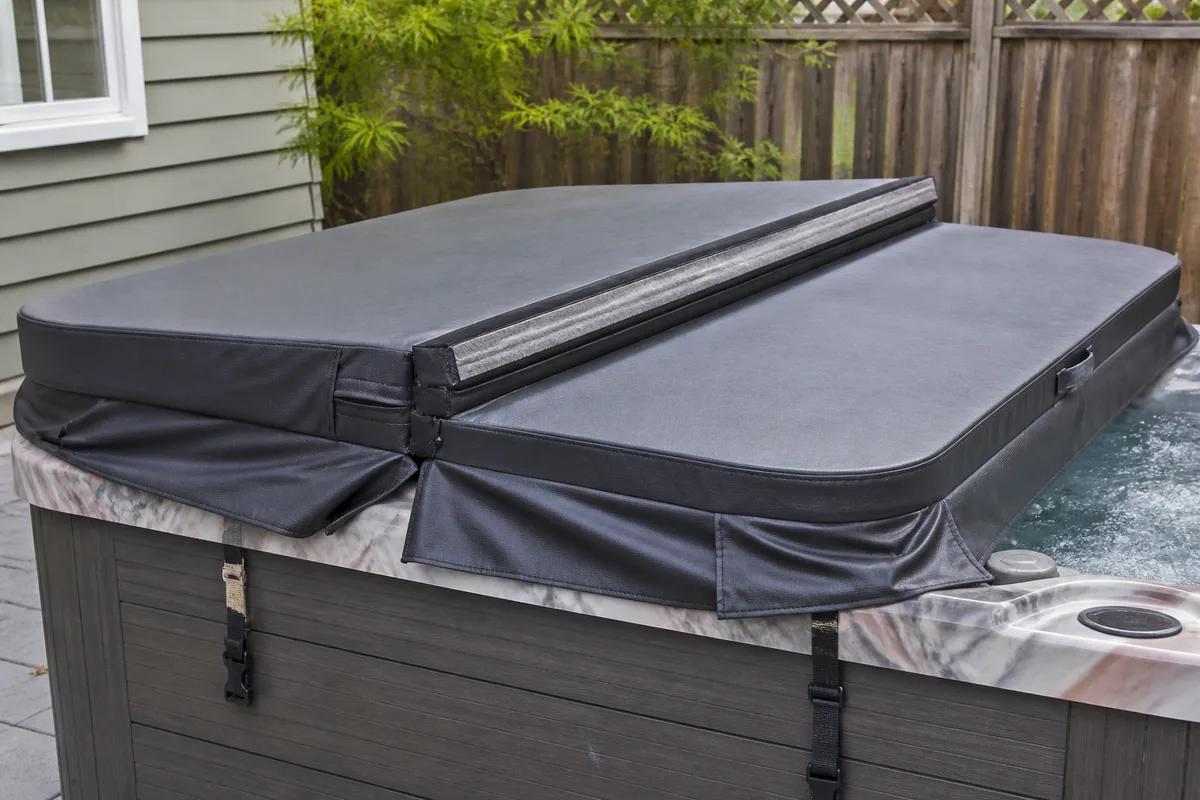
A replacement cover should match your spa's exact shape and measurements. Jacuzzi guidance emphasizes fit first, then construction details such as foam, vapor barrier, skirt, and straps. A cover helps with heat retention and access control, but it is not a substitute for supervision.
- By
- TubWise Editorial Team
- Published
- Last updated
- hot tub cover
- spa cover
- replacement cover
- buying guide
Direct answer
Choose a replacement cover by matching your spa’s exact shape and dimensions first, then compare construction details your cover maker or spa manufacturer documents, such as foam core, vapor barrier, skirt length, hinge layout, straps, and locks. Jacuzzi states that a good fit is the most important shopping factor (Jacuzzi).
Safety note
Follow the spa and cover manufacturer instructions for installation, straps, locks, snow load, and handling. A cover can help limit access when it is used correctly, but it does not replace adult supervision of children or pets. Do not treat marketing language as a certified load rating unless the manufacturer documents that rating for your cover.
How TubWise researched this guide
This guide is desk research based on manufacturer cover documentation, measuring instructions, and related safety statements. TubWise did not independently lab-test covers. The focus is selection criteria and fit, not naming a universal winner. Cover specifications, warranties, and availability can change, so confirm current details before purchasing.
Start with exact fit
Jacuzzi says accurate measurements are key and that buying from the spa manufacturer is easiest because the maker has detailed drawings for its spas (Jacuzzi). If you buy from another cover company, that maker will follow the measurements you provide. Wrong measurements can leave you with a custom cover that does not fit, may not retain heat well, and often cannot be returned (Jacuzzi).
There is no single universal measuring method for every custom-cover maker. Follow the measurement instructions from the seller you are ordering from. Jacuzzi’s measuring guidance for custom covers asks for:
- full length of the spa
- full width of the spa
- corner radius when corners are rounded
Some cover makers provide a printable radius template for rounded corners, and odd shapes may need a physical template (Jacuzzi). Also record hinge direction and skirt needs if the seller asks for them, so the cover opens and hangs the way your pad and spa edge allow.
For Jacuzzi swim spa replacements, Jacuzzi recommends identifying the unit by brand, model name, and length (Jacuzzi). For standard hot tubs, brand, model, and year help a dealer pull the correct OEM cover when drawings exist.
Construction details worth comparing
Jacuzzi lists specification categories it uses for its own covers, including foam density, vapor barrier bag density, vinyl weight, structural support, stitching and thread, skirt length, handle material, and zipper material (Jacuzzi). Ask the seller which of those details apply to the cover you are buying:
- Foam core and density. Jacuzzi describes EPS foam density as related to strength and durability on ProLast covers, and describes a higher-density ProLast Extreme option for colder, harsher climates and heavy snowfall on some products (Jacuzzi). That does not mean thicker or denser foam is always better for every spa or climate.
- Vapor barrier. Jacuzzi swim-spa cover guidance treats a cover that feels noticeably heavier or spongy as a sign moisture may have entered the foam and reduced insulating value (Jacuzzi). Scope that cue to the cover type your seller documents.
- Skirt length. Jacuzzi describes the skirt as helping protect the spa’s acrylic edge from sunlight and weather when it is long enough (Jacuzzi).
- Stitching and hardware. Ask what stitching, handles, straps, and locks are included. Jacuzzi’s setup guidance includes planning space for cover safety latches (Jacuzzi). Use straps and locks as the spa and cover makers direct. They are not a substitute for supervising children or pets.
Cover type and handling
Jacuzzi’s swim-spa cover page discusses bi-fold, rolling, and automated options with different handling effort (Jacuzzi). Match the cover type your spa maker or cover seller offers to:
- how often you open the spa
- whether one person needs to operate it
- whether a cover lifter is part of your plan
Jacuzzi describes cover lifters as accessories that can make removing and replacing the cover easier and help protect the cover (Jacuzzi). A lifter does not change the need for a correctly sized cover.
Insulation and climate
Jacuzzi describes a tight-fitting cover as helping with heat retention and keeping debris out of the water (Jacuzzi). Check the hinge area for gaps once the cover is on, because Jacuzzi notes heat can escape at a poor hinge seal (Jacuzzi). For cold or snowy climates, ask which foam density and construction the cover maker documents for that use rather than assuming any thick cover is suitable.
Treat any energy-cost claims as the manufacturer’s labeled statements for that cover, not as a universal savings guarantee. A cover that no longer seals well can also increase overnight water loss from evaporation; see Hot Tub Losing Water Overnight: Leak or Evaporation? if the waterline drops while the spa sits idle.
Safety hardware without overclaiming
Jacuzzi states that its covers are large and heavy enough to help prevent children, pets, and other animals from accessing the spa when it is not in use, and that Jacuzzi covers meet ASTM F-1346-91 safety requirements for pools and spas (Jacuzzi). Those statements apply to Jacuzzi’s documented covers. Do not assume every third-party cover meets the same standard. Do not treat any cover as a guarantee of child safety, and do not assume a cover can safely support a person unless the manufacturer documents a load rating for that cover.
Warranty terms to compare
Jacuzzi advises checking that a cover warranty comes from a company likely to remain in business to honor it (Jacuzzi). Compare what the warranty covers (foam, vinyl, stitching), what voids it, and whether the cover is sold through an authorized dealer for your spa brand. A longer warranty is not, by itself, proof of quality.
Safe checks before you order
- Identify spa brand, model, and year.
- Measure length, width, and corner radius as the cover maker instructs, or order the OEM cover by model.
- Confirm hinge direction, skirt needs, and strap or latch locations.
- Ask for documented foam, vapor barrier, and climate guidance for your location.
- Confirm warranty terms in writing.
- Plan handling with a second person or a manufacturer-compatible lifter if the cover is heavy.
- Plan monthly cleaning after the cover is installed; see How to Clean a Hot Tub Cover. If you are replacing because of weight, sagging, pooling, or odor, see When Should You Replace a Hot Tub Cover?.
When to stop and get help
Contact your dealer or cover maker if:
- your spa shape is unusual and measurements conflict
- you cannot confirm ASTM or other safety claims for a non-OEM cover
- the delivered cover does not match the ordered dimensions
- latches, straps, or a lifter do not align with your spa
If you remove a cover during an overheat message, follow the scoped guidance for your display, such as Jacuzzi OH or Sundance OH, and keep people out of the water until the spa is safe again.
Sources
- The Essential Guide to Hot Tub Covers: Benefits, Types, and Maintenance — Jacuzzi; Accessed 2026-08-01
Official Jacuzzi consumer guide. Covers benefits, measuring length/width and corner radius, custom fit when buying outside the OEM, foam density language for ProLast covers, vapor barrier and construction themes, cover lifters, and ASTM F-1346-91 statement for Jacuzzi covers. Marketing claims about energy savings are treated cautiously; only selection and fit facts are used.
- Hot Tub Covers: Put a Lid on Your Investment — Jacuzzi; Accessed 2026-08-01
Official Jacuzzi page. States perfect fit is the most important shopping factor; OEM drawings make fit easiest; wrong third-party measurements yield a non-returnable ill-fitting cover that may not retain heat. Lists Jacuzzi cover specification categories including foam density, vapor barrier, vinyl weight, stitching, skirt length, and hardware. Mentions ASTM F-1346-91 for Jacuzzi covers. Describes covers as large and heavy enough to help prevent children, pets, and animals from accessing the spa when not in use - paraphrased carefully without converting that into a guarantee.
- Swim Spa Cover Options: Choosing the Right Protection — Jacuzzi; Accessed 2026-08-01
Official Jacuzzi swim-spa cover page. Used for replacement identification by brand/model/length, waterlogged/heavier cover as a replacement cue, and handling/accessibility differences among cover types. Scope is swim spas; general selection lessons are attributed accordingly.
- Complete Beginner's Guide to Setting Up Your Jacuzzi — Jacuzzi; Accessed 2026-08-01
Mentions planning space to attach cover safety latches when the spa is not in use. Used only for latch/access planning language.
Related articles
How to Clean a Hot Tub Cover
Clean a vinyl spa cover monthly with mild soap or baking soda on the top, water only on the underside, then condition with a manufacturer-approved protectant.
Read guideWhen Should You Replace a Hot Tub Cover?
Replace a spa cover when manufacturer wear signs appear: damage, sagging, waterlogging, or a musty foam-core odor that cleaning does not fix.
Read guideWhy Is My Hot Tub Cover So Heavy?
A hot tub cover can feel heavy from rain or snow on top, normal foam size, or moisture inside the foam after the vapor barrier fails.
Read guideHow to Choose a Replacement Hot Tub Filter
Match a replacement hot tub filter by part number, spa model, and exact cartridge dimensions. A fit guide for homeowners.
Read guideHot Tub Not Heating: What to Check First
Hot tub not heating? Check power, water level, filters, and safety trips before calling a technician.
Read guide