Buying Guidescleaning-tools
How to Choose a Hot Tub Vacuum
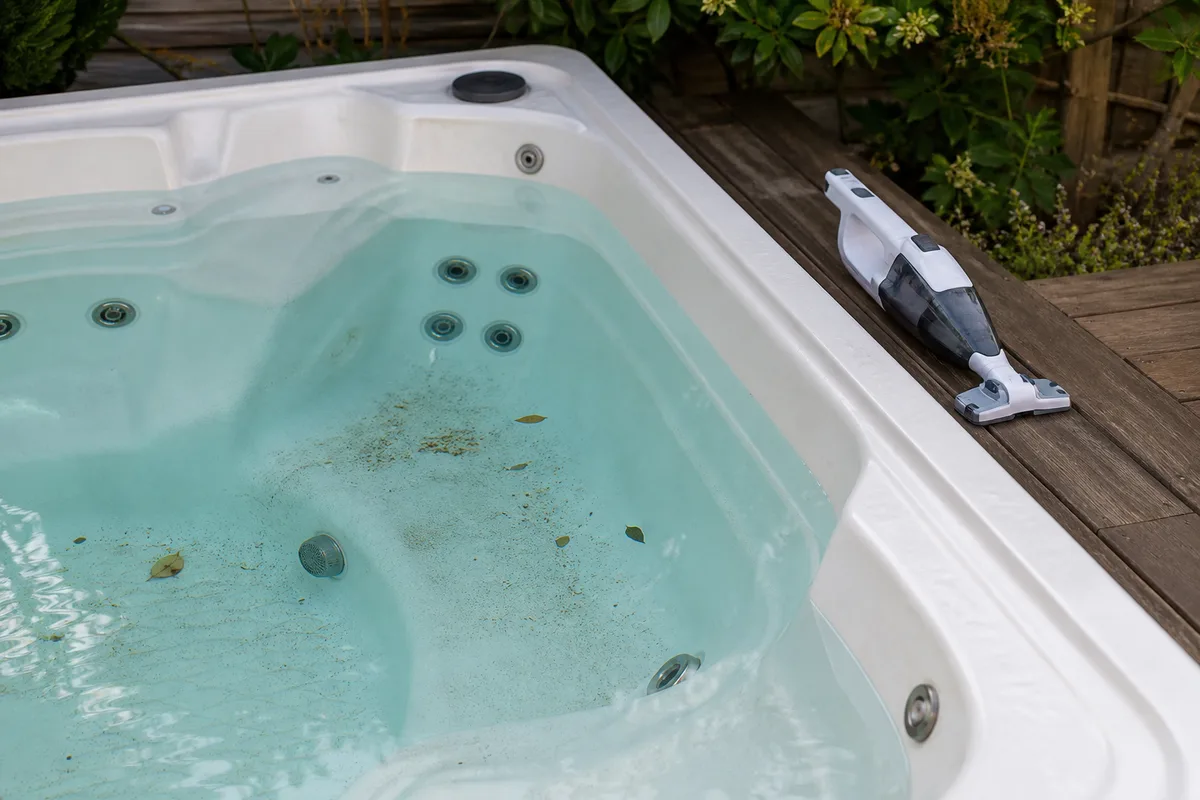
Choose a spa vacuum by matching the tool category to your debris, water depth, and spa type. Manufacturer product literature describes cordless rechargeable units, battery handhelds, and hose-free designs with different runtime and debris-bag needs. A vacuum does not replace filtration, sanitizer, or water testing.
- By
- TubWise Editorial Team
- Published
- Last updated
- hot tub vacuum
- spa vacuum
- cleaning tools
- buying guide
Direct answer
Choose a hot tub vacuum by matching the tool category to the debris you see, the depth and shape of your spa, and how you want to power the cleaner. Manufacturer product pages for cordless spa vacuums commonly document runtime, debris bags or filters, and pole options. No vacuum replaces a clean filter, balanced sanitizer, or a drain when your manual says the water is spent.
Safety note
Use only tools designed for underwater spa or pool cleaning according to their manuals. Do not put a household vacuum or shop vac into filled spa water. For battery and rechargeable models, follow the maker’s charger, battery, and drying instructions. Keep chargers and spare batteries away from wet areas unless the manufacturer says otherwise.
How TubWise researched this guide
This guide is desk research based on spa water-care documentation and official vacuum manufacturer specifications for representative tool categories. TubWise did not independently lab-test spa vacuums. The focus is selection criteria by tool type, not naming a universal winner. Runtime claims, bag designs, and availability can change, so confirm current product details before purchasing.
What a spa vacuum is for
A spa vacuum is for loose debris on the shell floor and seats: sand, silt, leaves, and similar particles that settle instead of staying in the filter. Filtration and chemistry still do the water-treatment work. Jacuzzi’s setup and swim-spa maintenance guidance center on filters, sanitizer, and balance as core care steps (Jacuzzi). Vacuuming is optional cleanup on top of that routine.
If the water is cloudy from chemistry or a dirty filter, clear those issues first. See Why Is My Hot Tub Water Cloudy? and How to Clean a Hot Tub Filter.
Tool categories to compare
Compare categories by what each product manual actually documents. The groups below are selection categories, not a ranking.
Manual suction or pump-style cleaners
These rely on hand pumping or simple suction without a motor. Read the product instructions for debris limits and emptying. Effort and water-moving rate vary by design; do not assume any manual vac is maintenance-free.
Hose, siphon, or venturi-style cleaners
These use water flow from a garden hose or a spa plumbing adapter to create suction. Confirm that any adapter is approved for your spa before connecting to fittings, and read the product instructions for water-pressure needs, hose handling, and whether makeup water enters the spa.
Rechargeable cordless spa vacuums
Manufacturer literature for individual cordless models may list lithium-ion or similar rechargeable packs, onboard debris chambers or reusable filter bags, pole sections, runtime, and recharge time. One Water Tech example, the Pool Blaster Catfish Gen 2, lists up to 45 minutes of continuous cleaning, a full recharge after 4 hours, a reusable multilayer filter bag, and an 8-inch vac head (Water Tech). Those figures apply to that model only, not to all cordless vacuums.
Replaceable-battery handhelds
Some compact spa vacuums use standard consumer batteries instead of a charge cradle. One Water Tech example, the Pool Blaster Spa Vac Plus, lists C-cell battery power, a reusable sand-and-silt filter bag, and a sectional pole (Water Tech). Compare that model’s labeled battery and bag needs with rechargeable options using each product’s own documentation.
TubWise is not recommending these examples as picks. They show the kinds of specifications manufacturers publish: power source, runtime, bag type, head width, and pole length.
Match the tool to your spa and debris
Ask, then verify against the product manual:
- Debris type: whether the maker says the bag or filter captures the fines or leaves you see
- Reach and head size: whether the pole and vac head fit your seating and footwells
- Shell or liner type: whether the maker supports hard-shell acrylic, soft-sided, or inflatable spas, and what brush materials it allows. Do not assume inflatable compatibility without manufacturer support.
- Runtime vs chore length: whether the labeled runtime covers a typical cleaning, or whether you must pause to empty the bag
- Storage and drying: how the maker says to dry bags and housings after use
What not to buy for this job
- Do not use a plug-in household vacuum in the spa.
- Do not use a shop vac in filled spa water.
- Do not assume a pool robot sized for a swimming pool will fit or navigate a residential spa.
- Do not treat suction marketing numbers as comparable across brands without the same test method.
Vacuuming does not replace other care
Even after the floor looks clean:
- keep filtration on its normal schedule
- test and maintain sanitizer and balance
- drain when your manual or water condition requires it
See Should You Drain a Hot Tub if the Water Is Cloudy? when cleanup and chemistry are not enough. Filter fit still matters for ongoing clarity; see How to Choose a Replacement Hot Tub Filter.
Safe checks before you order
- List the debris you actually see after a normal week of use.
- Measure how far you need to reach from the spa edge to the farthest footwell.
- Choose a power category you will actually recharge or restock batteries for.
- Read the manufacturer’s runtime, bag, and depth or use limits.
- Confirm brush and head materials are appropriate for your shell or liner.
- Plan drying and bag cleaning so the tool stays usable.
When to stop and get help
Stop and contact a dealer or technician if:
- debris returns immediately because jets are blowing material out of dead legs you cannot reach
- you would need to open equipment bays or modify plumbing to attach a vacuum
- the spa shell is scratched by cleaning tools
- water quality problems continue after vacuuming, filter care, and labeled chemistry
A vacuum is a cleanup tool. Persistent cloudiness, foam, or sanitation problems need water-care diagnosis, not a more aggressive cleaner alone.
Sources
- Pool Blaster Catfish Gen 2 Cordless Spa and Hot Tub Vacuum — Water Tech; Accessed 2026-08-01
Official manufacturer product page for one cordless rechargeable spa and pool vacuum category example. Documents lithium-ion power, stated runtime and recharge time, reusable multilayer filter bag, vac head size, and pole use. Used only to illustrate category features manufacturers publish; not a TubWise product ranking or endorsement.
- Pool Blaster Spa Vac Plus — Water Tech; Accessed 2026-08-01
Official manufacturer product page for a compact cordless spa vacuum category example powered by C-cell batteries, with reusable filter bag and sectional pole. Used for category contrast (replaceable-battery handheld vs rechargeable lithium). Not a ranking.
- Complete Beginner's Guide to Setting Up Your Jacuzzi — Jacuzzi; Accessed 2026-08-01
Used for the broader point that filtration, chemistry, and circulation remain core water-care systems. Vacuuming is an accessory task and does not replace those systems.
- The Complete Guide to Swim Spa Maintenance — Jacuzzi; Accessed 2026-08-01
Reinforces sanitation, balance, and filtration as primary water-care steps. Used to keep vacuum selection in context as debris cleanup, not water treatment.
Related articles
Why Is My Hot Tub Water Cloudy?
Cloudy hot tub water can trace back to water chemistry, sanitizer, filtration, or old water. Here's how to narrow it down and when to stop using the spa.
Read guideShould You Drain a Hot Tub if the Water Is Cloudy?
Not always. Manufacturers point to draining only after correct chemistry, a clean filter, and treatment haven't cleared the water. Here's how to decide.
Read guideHow to Clean a Hot Tub Filter
Manufacturer guides describe a weekly hose rinse and a periodic soak in a dedicated filter cleaner. Here's the method, and what Jacuzzi and Sundance warn against.
Read guideHow to Choose a Replacement Hot Tub Filter
Match a replacement hot tub filter by part number, spa model, and exact cartridge dimensions. A fit guide for homeowners.
Read guide