Water Carescale
Why Is There Scale on My Hot Tub Shell?
Hot Spring's troubleshooting chart lists scale with high total alkalinity and/or pH and high calcium content in the water. Hot Spring manuals define scale as rough calcium-bearing deposits that can coat spa surfaces, heaters, and plumbing, and form more readily at higher water temperatures.
- By
- TubWise Editorial Team
- Published
- Last updated
- scale
- calcium hardness
- spa shell
- hard water
- water care
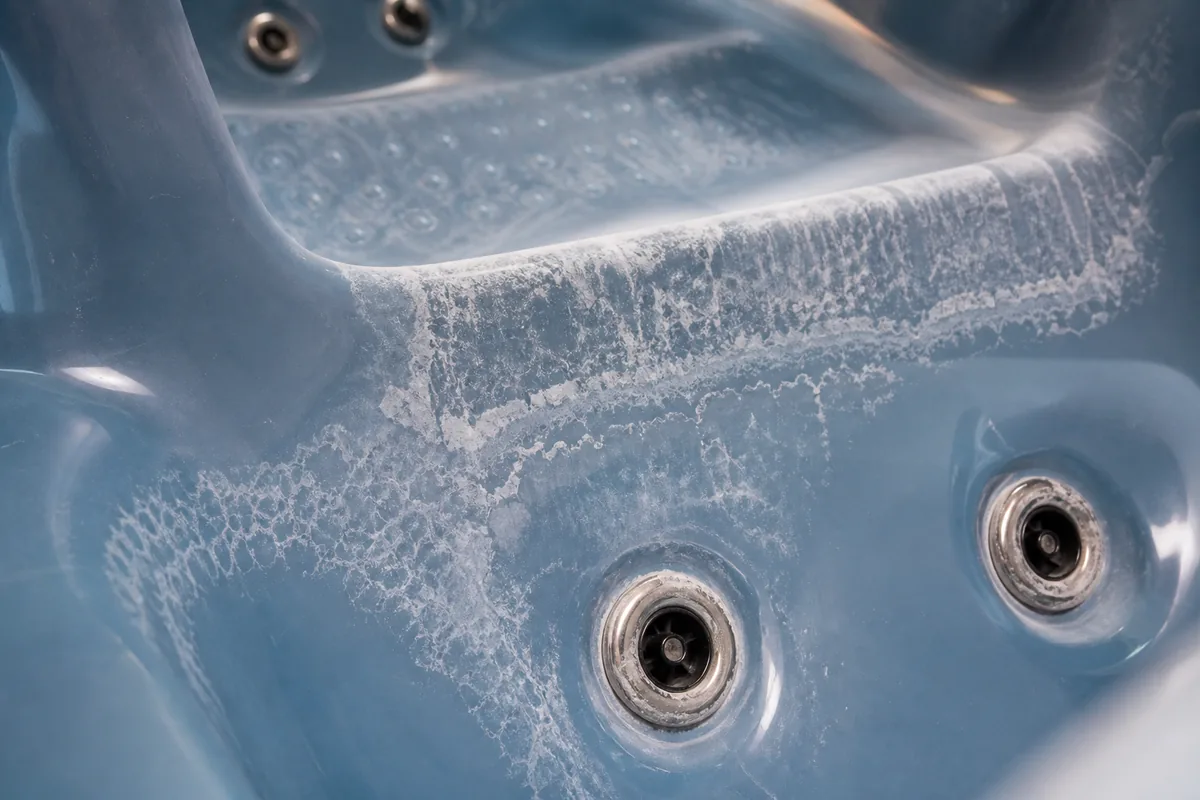
Scale on a hot tub shell is mineral deposit, not an oil-and-dirt scum ring. Hot Spring’s troubleshooting chart lists Scale with total alkalinity and/or pH too high and high calcium content in the water (Hot Spring). The Highlife Collection owner’s manual defines scale as rough calcium-bearing deposits that can coat spa surfaces, heaters, and plumbing lines, and clog filters, and states that scaling is generally caused by mineral content combined with high pH, forming more readily at higher water temperatures (Hot Spring Highlife Manual).
Jacuzzi describes calcium carbonate scale as white, chalky buildup that can clog jets and affect heaters when high alkalinity drives pH high (Jacuzzi). Sundance Spas describes scaling as a sandpaper-like roughness on spa surfaces from calcium buildup (Sundance Spas). If the main complaint is texture rather than a visible crust, start with Why Does My Hot Tub Surface Feel Rough or Sandy?. For fill precautions in hard-water areas, see How to Fill a Hot Tub With Hard Water.
For soft brownish film at the waterline, see Why Is There a Ring Around My Hot Tub Waterline?. For rust-colored metal stains, see Why Does My Hot Tub Have Rust-Colored Stains?.
Safety note
Use only cleaners approved for your spa shell. Do not scrape acrylic with metal tools or abrasive pads that your manual forbids. See How to Clean a Hot Tub Shell Without Damaging It. Follow chemical product labels. Do not mix different pool or spa chemicals. Confirm calcium, pH, and alkalinity targets in your own manual; Hot Spring publishes different hardness ranges for standard care versus its FreshWater Salt System context (Hot Spring Highlife Manual).
Causes to check
High calcium content
Hot Spring’s Scale chart row lists high calcium content in the water (Hot Spring). The Highlife manual states that high calcium levels can cause scale formation on spa equipment and shell, and that low calcium can make water corrosive (Hot Spring Highlife Manual). Hot Spring’s calcium FAQ ties reducing calcium hardness to protecting jet pumps and heaters from scale buildup (Hot Spring).
High total alkalinity and/or high pH
The same Hot Spring Scale row lists total alkalinity and/or pH too high (Hot Spring). The Highlife manual states that high pH can cause high levels of calcium to form scale (Hot Spring Highlife Manual). Jacuzzi links calcium carbonate scale formation to high alkalinity and notes that scaling accelerates when high alkalinity drives pH above 8.0 in that guidance (Jacuzzi). Sundance likewise names elevated alkalinity among contributors to calcium buildup (Sundance Spas).
Hard water and topping off
Hot Spring notes that calcium hardness can increase over time from topping off (Hot Spring). The Highlife manual notes that as water evaporates and new water is added, dissolved minerals including calcium increase (Hot Spring Highlife Manual).
Scale versus other deposits
- Waterline oils and dirt are Hot Spring’s organic buildup / scum ring path, not the Scale row (Hot Spring).
- Green or brown metal stains belong on the Stains path with iron or copper (Hot Spring).
Safe checks you can do
- Test calcium hardness, total alkalinity, and pH first. See How Often Should You Test Hot Tub Water?.
- Compare readings to your manual. Do not borrow another brand’s numeric target without checking your own documentation.
- Lower alkalinity and pH only as labeled if they are high for your system. Hot Spring’s Scale row directs owners to adjust total alkalinity and pH into range (Hot Spring).
- Address high calcium with the method your brand documents. Hot Spring’s calcium FAQ describes testing, then using a Vanishing Act calcium remover when needed, and considering a water softener when calcium is very high (Hot Spring). Follow that FAQ and your owner’s manual for placement and timing. Do not invent a dose for a different brand’s product.
- If scale already coats the shell, drain and clean per your brand. Hot Spring’s Scale row says to drain, scrub off the scale, clean the spa shell with FreshWater Spa Shine, and refill when scale requires removal (Hot Spring). Match cleaners to your shell guidance.
- Retest after corrections before assuming the problem is solved.
When to stop and get help
Stop scrubbing and stop stacking calcium removers if:
- Scale returns quickly after labeled chemistry corrections
- You cannot bring calcium, alkalinity, or pH into your manual’s ranges
- The shell is scratched or dull after cleaning attempts
- Flow, heating, or filter problems continue after a drain and clean
Contact your dealer or a qualified spa technician. For drain interval context, see How Often Should You Drain and Refill a Hot Tub?. For haze without hard scale, see Why Is My Hot Tub Water Cloudy?.
Sources
- Hot Tub Water Care Troubleshooting Hot Tub Water Problems — Hot Spring Spas; Accessed 2026-08-03
Official Hot Spring troubleshooting chart Scale row: total alkalinity and/or pH too high; high calcium content; adjust TA/pH; drain and scrub scale if needed; Stain & Scale and rebalance.
- Highlife Collection Owner's Manual — Hot Spring Spas / Watkins Wellness; Accessed 2026-08-03
Highlife Collection owner's manual definition of Scale as rough calcium-bearing deposits; high calcium causes scale formation; high pH can cause high calcium to form scale; Vanishing Act guidance for high CH.
- How Do I Reduce Calcium Hardness In My Spa Water? — Hot Spring Spas; Accessed 2026-08-03
Hot Spring FAQ on testing calcium, Vanishing Act use, water softener when calcium is very high, and scale protection for pumps and heater.
- How to Lower Alkalinity in Hot Tub — Jacuzzi; Accessed 2026-08-03
Jacuzzi guidance describing calcium carbonate scale as white, chalky buildup that can clog jets and affect heaters when high alkalinity drives pH high.
- Overcoming Hard Water Issues in Your Hot Tub: 3 Steps to Combat Scaling — Sundance Spas; Accessed 2026-08-03
Sundance Spas guidance describing scaling as sandpaper-like roughness on spa surfaces from calcium buildup, with elevated alkalinity and hard water as contributors.
Related articles
Why Does My Hot Tub Surface Feel Rough or Sandy?
A rough or sandy hot tub surface can be calcium scale, but texture alone is not a diagnosis. Here's how to separate scale feel from scum rings and metal stains.
Read guideHow to Fill a Hot Tub With Hard Water
Hard fill water can raise calcium and leave scale or metal issues later. Here's Hot Spring's documented fill precautions without universal hardness targets or dosing.
Read guideWhy Does My Hot Tub Have Rust-Colored Stains?
Rust-colored hot tub stains often track to iron or copper in source water and low pH or alkalinity. Here's what Hot Spring manuals say without assuming the spa is rusting.
Read guideWhy Is There a Ring Around My Hot Tub Waterline?
A hot tub waterline ring is often oils and dirt at the surface. Here's how Hot Spring and Jacuzzi describe scum rings, scale deposits, and safe cleanup.
Read guideHow to Clean a Hot Tub Shell Without Damaging It
Clean an acrylic spa shell with brand-approved products only. Hot Spring limits cleaners to plain water, Spa Shine, or Soft Scrub. Jacuzzi allows a damp cloth and gentle soap.
Read guideHow Often Should You Test Hot Tub Water?
CDC guidance says test hot tub chlorine and pH at least twice a day. Manufacturer maintenance schedules may list weekly or twice-weekly checks. Here's how to use both.
Read guide