Water Caresurface-condition
Why Does My Hot Tub Surface Feel Rough or Sandy?
Sundance Spas describes scaling as an unexpected sandpaper-like roughness on spa surfaces from calcium buildup. Hot Spring defines scale as rough calcium-bearing deposits on spa surfaces. A rough feel is a starting cue, not proof of one cause.
- By
- TubWise Editorial Team
- Published
- Last updated
- rough surface
- sandy surface
- scale
- spa shell
- water care
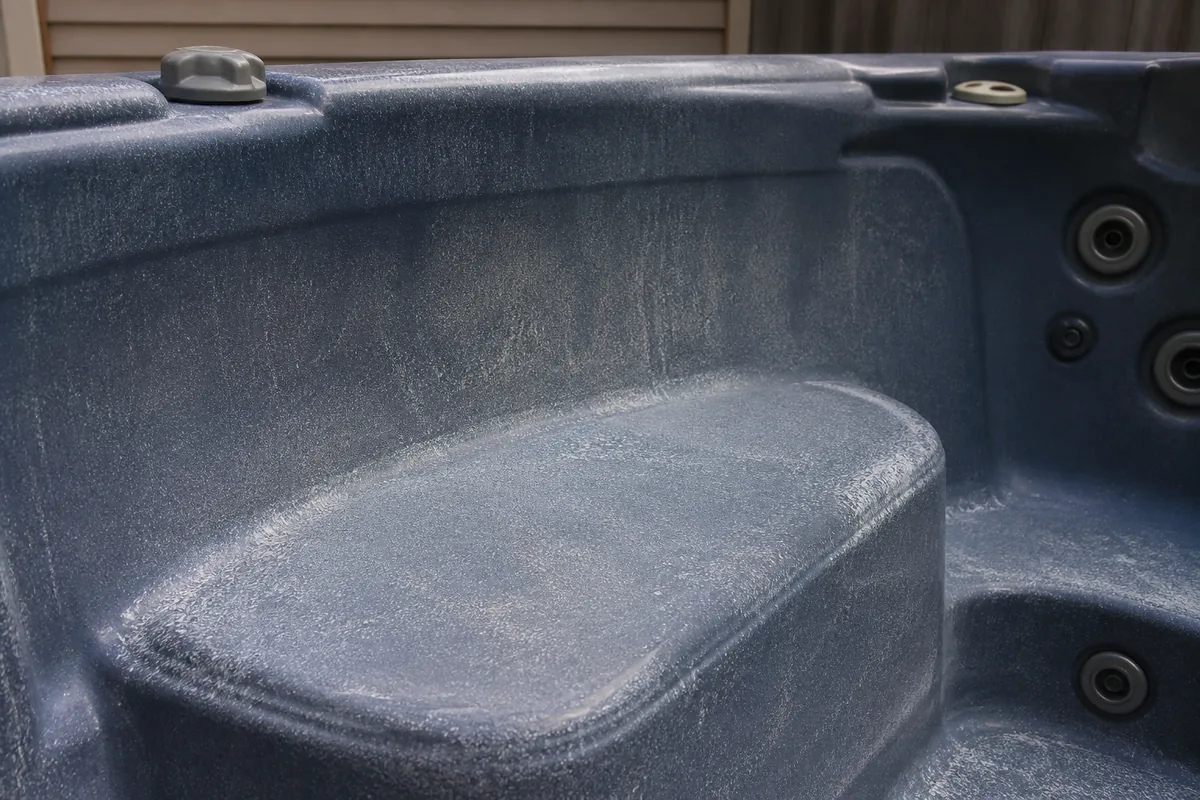
A rough or sandy feel on seats, walls, or the waterline is a surface cue. Sundance Spas describes scaling as an unexpected roughness akin to sandpaper on the spa’s surface from calcium buildup (Sundance Spas). Hot Spring defines scale as rough calcium-bearing deposits that can coat spa surfaces (Hot Spring Highlife Manual).
That does not mean every rough patch is calcium scale, and it does not mean the water itself is gritty. For the full calcium-scale cause list and cleanup path, see Why Is There Scale on My Hot Tub Shell?.
Safety note
Use only cleaners approved for your spa shell. Do not scrape acrylic with metal tools or abrasive pads your manual forbids. See How to Clean a Hot Tub Shell Without Damaging It. Test the water before adding chemistry products. Follow product labels. Do not mix different pool or spa chemicals.
What the texture can mean
Hard, chalky roughness
If the surface feels hard, chalky, or sandpaper-like, manufacturer language for calcium scale is the closest match (Sundance Spas; Hot Spring Highlife Manual). Confirm with a water test for calcium hardness, pH, and alkalinity rather than assuming scale from feel alone. See Why Is There Scale on My Hot Tub Shell?.
Soft, slippery, or oily film
Soft brownish film that wipes away with a clean rag is closer to Hot Spring’s organic buildup / scum ring path (oils and dirt), not the Scale row (Hot Spring). See Why Is There a Ring Around My Hot Tub Waterline?.
Colored staining without chalky crust
Green or brown colored marks that remain after wiping may track to Hot Spring’s Stains row (iron or copper in source water; low alkalinity and/or pH) rather than calcium scale (Hot Spring). See Why Does My Hot Tub Have Rust-Colored Stains?.
Safe checks you can do
- Feel and look closely. Hard chalky crust, soft oily film, or colored stain.
- Test calcium hardness, pH, and alkalinity before adding products. See How Often Should You Test Hot Tub Water?.
- If readings and texture point to scale, follow the scale article for attributed Hot Spring / Jacuzzi / Sundance guidance rather than inventing a scrub-and-dose plan here.
- If you are refilling in a hard-water area, review fill precautions in How to Fill a Hot Tub With Hard Water.
- Clean only with shell-approved products if wiping is needed.
When to stop and get help
Stop scrubbing and stop stacking calcium removers if the roughness remains after labeled chemistry and shell-safe cleaning, if the acrylic is scratched or dull, or if you cannot match readings to your manual. Contact your dealer or a qualified spa technician.
Sources
- Overcoming Hard Water Issues in Your Hot Tub: 3 Steps to Combat Scaling — Sundance Spas; Accessed 2026-08-03
Sundance Spas guidance describing scaling as sandpaper-like roughness on spa surfaces from calcium buildup, with hard water and elevated alkalinity as contributors.
- Highlife Collection Owner's Manual — Hot Spring Spas / Watkins Wellness; Accessed 2026-08-03
Highlife Collection owner's manual definition of Scale as rough calcium-bearing deposits that can coat spa surfaces, heaters, and plumbing.
- Hot Tub Water Care Troubleshooting Hot Tub Water Problems — Hot Spring Spas; Accessed 2026-08-03
Official Hot Spring troubleshooting chart with separate rows for Scale, Stains, and Organic buildup / scum ring.
Related articles
Why Is There Scale on My Hot Tub Shell?
Hot tub shell scale is calcium deposit from high calcium and high pH or alkalinity. Here's how Hot Spring and related manufacturer guidance describe causes and cleanup.
Read guideHow to Fill a Hot Tub With Hard Water
Hard fill water can raise calcium and leave scale or metal issues later. Here's Hot Spring's documented fill precautions without universal hardness targets or dosing.
Read guideWhy Is There a Ring Around My Hot Tub Waterline?
A hot tub waterline ring is often oils and dirt at the surface. Here's how Hot Spring and Jacuzzi describe scum rings, scale deposits, and safe cleanup.
Read guideWhy Does My Hot Tub Have Rust-Colored Stains?
Rust-colored hot tub stains often track to iron or copper in source water and low pH or alkalinity. Here's what Hot Spring manuals say without assuming the spa is rusting.
Read guideHow to Clean a Hot Tub Shell Without Damaging It
Clean an acrylic spa shell with brand-approved products only. Hot Spring limits cleaners to plain water, Spa Shine, or Soft Scrub. Jacuzzi allows a damp cloth and gentle soap.
Read guideHow Often Should You Test Hot Tub Water?
CDC guidance says test hot tub chlorine and pH at least twice a day. Manufacturer maintenance schedules may list weekly or twice-weekly checks. Here's how to use both.
Read guide