Troubleshootingheating
Why Is My Hot Tub Taking So Long to Heat Up?
Slow heat-up after a cold start or refill is not the same as a spa that never heats. Hot Spring documents an 18 to 24 hour window for water to reach about 100°F on first fill for specific collections, with the cover on. Confirm set temperature, cover use, and flow first. Do not raise the set point past your manufacturer's limit to compensate.
- By
- TubWise Editorial Team
- Published
- Last updated
- hot tub taking long to heat
- slow heating
- hot tub heater
- troubleshooting
Direct answer
If the spa is warming, but slower than you expected after a cold start or refill, start with cover use, set temperature, and whether heat is actually happening at all. Hot Spring states that after filling, owners should allow 18 to 24 hours for water to reach about 100°F, and Hot Spot quick-start guidance describes about 24 hours with the cover on for that collection (Hot Spring; Hot Spot). Those figures are manufacturer-scoped warm-up windows, not a universal degrees-per-hour rate for every spa.
Safety note
Do not open the control box. Do not test voltage, resistance, or continuity. Do not bypass a high-limit switch, flow or pressure switch, GFCI, or other safety control. Do not raise the set temperature above your manufacturer’s stated limit to “catch up” faster. If the spa shows overheating warnings, burning smells, melted parts, repeated breaker trips, or unpredictable behavior, shut off power and contact a qualified spa technician.
Slow heat-up vs no heat
Slow heat-up: Water is colder than desired, but temperature is climbing over hours.
No heat: The spa has power, yet water does not warm, or the heater never runs. See Hot Tub Not Heating: What to Check First and Hot Tub Has Power but No Heat.
Plateau below set point: Water warms then stops short of the selected temperature. That is a different symptom. See Why Is My Hot Tub Not Reaching the Set Temperature?.
Checks that match a slow heat-up
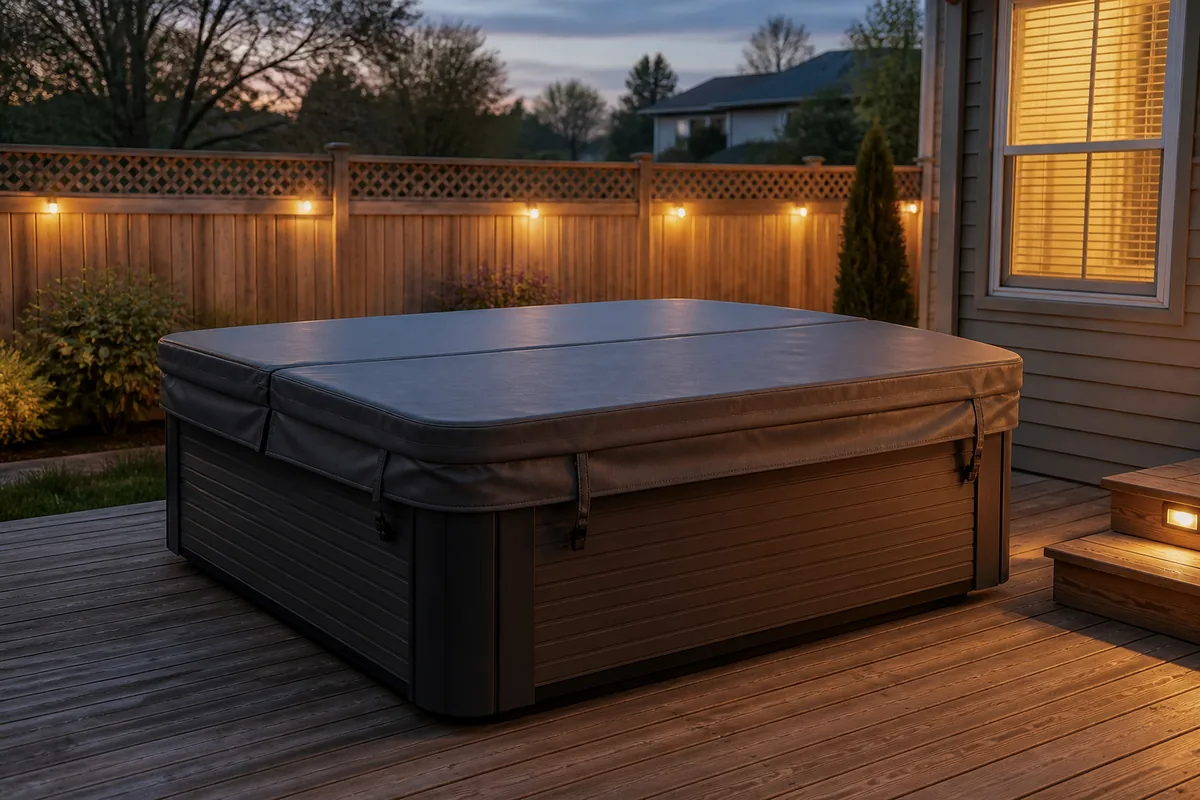
Confirm the cover is on during heat-up
Hot Spring and Hot Spot instruct owners to place the cover on the spa while water heats and stabilizes (Hot Spring; Hot Spot). An open or poorly sealing cover increases heat loss and stretches warm-up time. If the cover is waterlogged, sagging, or no longer seals, see When Should You Replace a Hot Tub Cover?.
Confirm set temperature and readiness cues
Check the set temperature on the panel. On certain Hot Spring Highlife models, a Ready indicator lights when water is within about 2°F of the set temperature (Hot Spring Highlife owner’s manual). A low set point, spa lock, or a mode that does not hold temperature continuously can look like “slow heating” when the spa is behaving as programmed.
A legacy Jacuzzi ProTech manual for specific older models lists an economy filtration mode that does not control water temperature continuously (Jacuzzi ProTech). That behavior is model-scoped. Check your own manual for Ready, Rest, Economy, or similar labels before assuming a heater fault.
Cold fill water takes longer
A refill from cold supply water starts farther from soak temperature than a spa that was already warm. Hot Spot also notes that very cold fill conditions can affect startup behavior and documents blending warmer fill water in that collection’s guidance when fill water is below about 50°F (Hot Spot). Follow only the fill and startup steps in your own manual.
If heat failed right after a drain and refill, also rule out air lock using Hot Tub Not Heating After a Refill.
Low flow can interrupt heating
Clogged filters are tied in Hot Spring troubleshooting to open pressure-switch conditions and high-limit trips that stop heat (Hot Spring). A spa that heats in short bursts then stops can feel “slow” even when the heater still works between trips. Inspect and clean filters only as your manufacturer directs. See Can a Dirty Filter Stop a Hot Tub From Heating?.
Electrical configuration can change available heat
Hot Spot documents that certain 115-volt configurations provide about 1000 watts of heat only when the pump runs on low speed and the thermostat calls for heat, and that the heater and jet pump cannot run at the same time in that 115-volt setup. Converted 230-volt operation uses a higher heater capacity on those models (Hot Spot). That is Hot Spot wiring-configuration behavior, not a universal rule. Do not attempt conversion or control-box work yourself.
If you want a planning estimate of electricity use from wattage and runtime assumptions, use the Hot Tub Electricity Cost Calculator. It estimates operating cost from the numbers you enter. It does not predict your utility bill.
What not to do
- Do not invent a “normal” degrees-per-hour rate for every brand.
- Do not run jets continuously as a heating shortcut.
- Do not keep resetting a high-limit or GFCI that will not hold.
- Do not assume the heater element is the only possible cause.
When to call a technician
Call qualified service if:
- Temperature does not rise at all after the manufacturer-documented warm-up window with the cover on
- High-limit, flow, or GFCI protection trips repeatedly
- You smell burning, see melted components, or the spa behaves unpredictably
- Panel indicators for high-limit or temperature-sensor faults keep returning after one manual-directed reset
Bottom line
Slow heat-up after a cold start or refill can trace to cover use, cold fill water, programmed modes, limited heater capacity on certain electrical configurations, or interrupted flow, not automatically to a failed heater. Use your manufacturer’s warm-up guidance and stop at any repeating safety trip.
Sources
- What is the Ideal Hot Tub Temperature? — Hot Spring Spas; Accessed 2026-08-04
Undated Hot Spring consumer temperature guide. Cited for first-fill warm-up guidance: allow 18 to 24 hours for water to reach about 100°F (38°C); keep cover closed and leave thermostat at the desired set point for routine use; CPSC-linked warning that temperatures above 104°F are dangerous for adults. Hot Spring brand guidance, not a universal degrees-per-hour rate.
- Highlife Owner's Manual (EN-US) — Watkins Wellness / Hot Spring; Accessed 2026-08-04
Document 303755.23 A, effective 12/22. Highlife Collection scope. Cited for spa pre-programmed to about 100°F and normally reaching that within 18 to 24 hours; place vinyl cover on spa and allow temperature to stabilize; Ready indicator within about 2°F of set temperature; water should never exceed 104°F; measure water temperature with an accurate thermometer before entering; high-limit / Power indicator guidance.
- Hot Spot Collection Quick Start Guide (2025) — Watkins Wellness / Hot Spot; Accessed 2026-08-04
2025 Hot Spot Collection quick-start (TX, Pace, Stride, SX, Relay, Rhythm scope as listed in guide). Cited for cover-on heat-up of approximately 24 hours; recommended soak range 100°F to 104°F; fill water below 50°F may trigger high-limit protection with warm-fill blending note; 115-volt heater about 1000 watts only when pump is on LOW and thermostat calls for heat; 115-volt note that heater and jet pump cannot operate at the same time; 230-volt conversion increases heater capacity. Hot Spot electrical configuration scope only.
- Fix Your Hot Tub with This Complete Troubleshooting Guide — Hot Spring Spas; Accessed 2026-08-04
Undated Hot Spring consumer troubleshooting chart. Cited for clogged filters tied to pressure-switch / no-heat and high-limit trips; keep cover on when not in use to help maintain temperature.
- ProTech LED Series Owner's Manual — Jacuzzi Premium; Accessed 2026-08-04
Document 6530-225, Rev. B, copyright 2002. Legacy J-310, J-320, J-330, and J-340 only. Cited for economy filtration mode that does not control water temperature continuously. Do not universalize to current Jacuzzi models.
Related articles
Hot Tub Not Heating: What to Check First
Hot tub not heating? Check power, water level, filters, and safety trips before calling a technician.
Read guideHot Tub Not Heating After a Refill
Hot tub not heating right after a refill? Trapped air in the plumbing is the most common cause. Here's how to check and purge it safely.
Read guideHot Tub Has Power but No Heat
Jets and lights work but the water won't warm up? Here's the specific check order for a hot tub with power but no heat.
Read guideCan a Dirty Filter Stop a Hot Tub From Heating?
Yes. A clogged filter can trip a hot tub's safety switches and stop the heater. Here's how to check and clean it safely.
Read guideWhy Is My Hot Tub Not Reaching the Set Temperature?
Hot tub warms but stops below the set temperature? Check Ready range, operating mode, cover heat loss, and interrupted heating before replacing the heater.
Read guideWhen Should You Replace a Hot Tub Cover?
Replace a spa cover when manufacturer wear signs appear: damage, sagging, waterlogging, or a musty foam-core odor that cleaning does not fix.
Read guide